
More than 1.5 million adults in the United States use supplemental oxygen therapy at home, according to a 2018 American Thoracic Society workshop report. For most of them, oxygen is what makes ordinary life possible, whether that means walking to the mailbox, sleeping through the night, or sitting at the table for a family dinner. For the caregivers who set up the equipment, swap the tanks and keep the tubing out of harm’s way, it also means a new set of responsibilities that tends to arrive all at once.
Those responsibilities are worth learning well, because oxygen carries a risk that is easy to underestimate. Oxygen does not burn by itself, but it makes everything around it burn faster and hotter. The NFPA Journal reports that between 2017 and 2021, fire departments responded to an estimated average of 228 home fires per year in which oxygen equipment was involved in ignition, and about 96 people per year died in them. Smoking was by far the leading factor.
This guide builds on our Managing Respiratory Conditions overview and covers the three things caregivers ask about most: the equipment, the safety rules, and the day-to-day logistics of living with oxygen at home.
What Home Oxygen Therapy Involves
Home oxygen is prescribed like any other medication. A doctor decides the flow rate, usually measured in liters per minute, and when it should be used: all day, only during sleep, or during activity. Those decisions come from testing blood oxygen levels, and they can change over time, which is why regular follow-up matters.
The most important rule for caregivers is also the simplest. Never adjust the flow rate on your own. It is natural to want to turn it up when someone seems short of breath, but more oxygen is not always better, and a sudden change in breathing is a reason to call the doctor rather than to experiment with the dial.
Understanding the Equipment
The type of system is usually chosen by the home equipment supplier together with the prescribing doctor, based on factors such as flow rate, how active the person is, hand strength and dexterity, and coverage, as described by Respiratory Therapy. Most households end up with a combination.
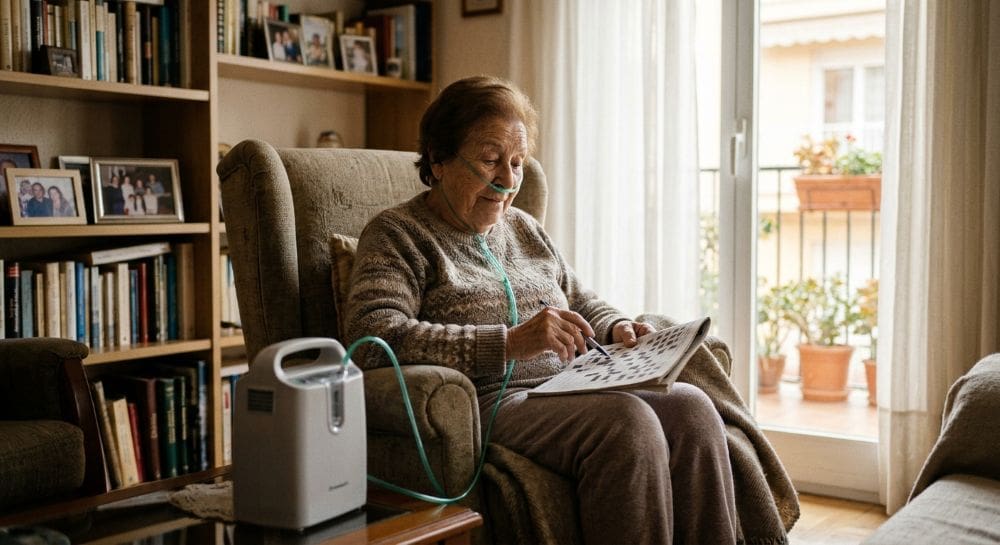
Stationary oxygen concentrators plug into a wall outlet, draw in room air and remove most of the nitrogen to deliver a steady supply of oxygen. They are the workhorse of home therapy, since they never run out as long as the power stays on. The tradeoffs are noise, some warmth and a cord that keeps the person tied to one area unless the tubing is long.
Portable oxygen concentrators run on rechargeable batteries and are light enough to carry or wheel. They make outings, appointments and travel much easier. Battery life varies, so a spare battery and a car charger are worth having.
Compressed gas cylinders are metal tanks with a regulator. They are simple and dependable, which makes them a common backup, but the supply is limited and the tank has to be replaced or refilled. Many are paired with a conservation device that delivers oxygen only as the person breathes in, which stretches the supply considerably.
Liquid oxygen is stored very cold in a base unit and used to fill a small portable vessel. It is less common today, but some people with higher flow needs still use it.
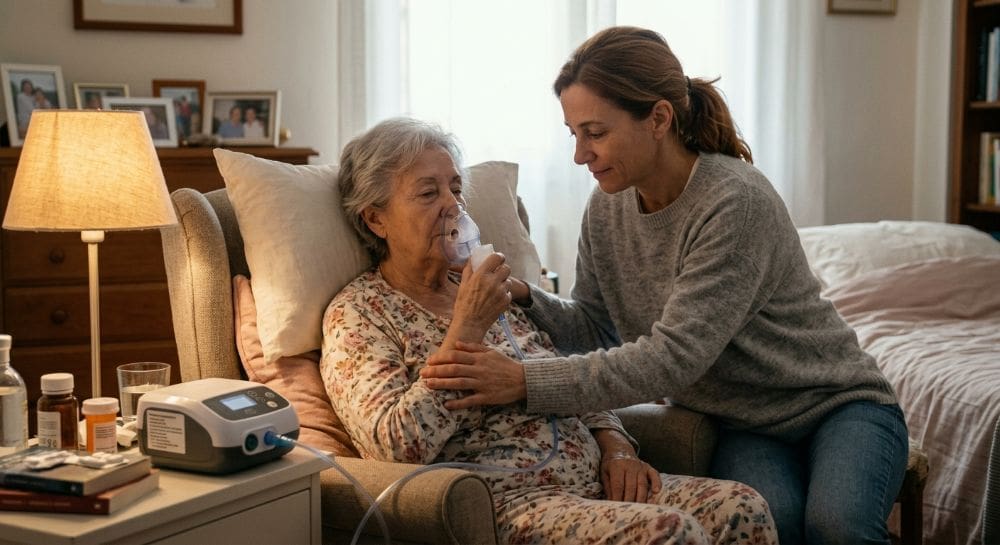
Oxygen reaches the body through a nasal cannula in most cases, or through a mask when a higher concentration is needed. Many systems add a humidifier bottle to ease dryness, which should be filled with distilled water and cleaned as the supplier directs.
🛒 Product Tip: Small accessories make a real difference in comfort. Cushioned ear covers ease sore ears from the cannula, tubing clips keep lines off the floor, and a rollator or walker with a built-in tank holder frees up both hands. For dry lips and nose, choose a water-based moisturizer, since petroleum-based products are a fire hazard around oxygen.
Fire Safety at Home
Although oxygen on its own doesn’t burn, oxygen-enriched air acts as an accelerant, making fires start more easily and spread more rapidly. However, with a few simple habits, the risk of fire can be largely negated.
- No smoking or vaping near oxygen. This includes visitors. Post a “No Smoking, Oxygen in Use” sign at the entrance to the home.
- Keep heat away. OSF HealthCare advises keeping oxygen at least five feet from gas stoves, candles, electrical devices and other heat sources. Some fire departments ask for more distance, so confirm the number with your supplier.
- Let the equipment breathe. Never drape a blanket or clothing over a concentrator or tank, and never tuck it into a closet. OSF notes that this lets oxygen build up around the unit and makes a fire easier to start.
- Mind the electrical supply. Plug a concentrator into a grounded wall outlet, not an overloaded extension cord or power strip.
- Secure the cylinders. Keep them upright in a stand or cart so they cannot fall, and close the valve when not in use.
- Avoid oil and petroleum products. Skip petroleum jelly, oil-based lotions and aerosol sprays near the equipment.
- Prepare for emergencies. Test smoke alarms, keep a fire extinguisher handy, plan an exit route, and let your local fire department know oxygen is used in the home.
- Be careful in the kitchen. Palm Beach County Fire Rescue advises against using oxygen while cooking with gas.
⚠️ Important: The no-smoking rule covers the whole household, not just the person on oxygen. Some safety guides recommend not allowing smoking in the home at all, even when the oxygen is turned off. If someone in the family smokes, ask them to do it outdoors and well away from the door.
Daily Logistics: Making Oxygen Part of Normal Life
Once the safety basics are in place, the real work is building a routine that does not take over the day.
Plan the tubing. A long line gives freedom to move between rooms, but loose tubing is also a tripping hazard, and falls are a serious risk for anyone who already has trouble breathing. Route the line along walls, never under rugs, and mark it with brightly colored tape where it crosses a doorway. Our room-by-room fall prevention guide covers other hazards worth fixing at the same time.
Check the basics every day. Confirm the flow setting matches the prescription, look for kinks or cracks in the tubing, check the cylinder gauge or battery level, and make sure the humidifier has enough water. Keep a spare cannula and a spare length of tubing on hand.
Keep up with cleaning. Concentrators have filters that need regular washing, often weekly, and cannulas and humidifier bottles need replacing or cleaning on a schedule. Follow the manufacturer’s directions and the supplier’s advice, and write the dates on a calendar so nothing slips.
Have a backup plan. Know how many hours a full cylinder lasts at the prescribed flow rate, and keep enough backups for a power outage. Main Line Health suggests unplugging the concentrator during an outage to avoid a spark when power returns, then switching to a cylinder. It is also wise to tell your electric company that someone at home depends on medical equipment.
Plan outings with a cushion. Work out how long the portable supply will last, then add extra time for delays. When driving, keep cylinders upright and secured in the passenger area, not the trunk, as the same Palm Beach County guidance recommends. For longer trips, our day out guide helps with planning, and anyone flying should check with the airline well in advance about approved portable concentrators.
Think about sleep. If the person also uses a CPAP machine, ask the supplier how oxygen should be connected, and read our sleep apnea and CPAP guide for more on that equipment.
Keep the supplier’s phone number, equipment serial numbers, and the doctor’s contact details on a card near the concentrator. When something stops working at 2 a.m., you will be glad that you won’t have to hunt for them.
📥 Download This Guide: Stay on top of equipment checks and cleaning with our free Home Oxygen Daily Care Log, a simple checklist you can print and keep next to the concentrator.
When to Call for Help
Your doctor should give you a written plan for what to do when breathing changes, and that plan comes first. As general guidance, call the equipment supplier if an alarm sounds, the unit stops working, or the flow seems low. Call the doctor if the person is more short of breath than usual, needs more oxygen than before, has unusual sleepiness, morning headaches or confusion, or has swelling in the ankles or feet.
🚨 When to Act: Call 911 for severe trouble breathing, blue or gray lips or face, chest pain, sudden confusion, or if the person cannot be woken. If there is a fire, leave the home immediately, and do not go back for equipment.
📥 Download This Guide: Our free Home Oxygen Therapy Quick Reference Guide puts the safety rules, daily checks and warning signs on a single page.
Conclusion
Adapting to home oxygen therapy can be a little daunting at first with new machines to learn, new rules to adjust to and household routines that suddenly revolve around a tube. However, most caregivers find that after a few weeks the checks become habit, the safety rules become automatic, and the equipment fades into the background. What matters is staying steady with the basics, asking questions early, and remembering that you do not have to get everything perfect to be doing it well.
At LL Medico, we’re not new to home oxygen. While your equipment itself comes from your prescribing supplier, we can help with everything around it. Our mobility aids include rollators and walkers that make getting around easier, our home safety devices help reduce the fall risks that tubing can add, and our adult diapers take one worry off the list when moving to the bathroom takes extra effort. If you have questions, call us at 855-422-4556 or email support@llmedico.com, and we will be happy to help.
In closing, let’s take courage from the wise words of Eleanor Roosevelt, “You gain strength, courage, and confidence by every experience in which you really stop to look fear in the face.” Every new routine you master makes the next one easier. You are building skills that will carry you through this and whatever comes next.