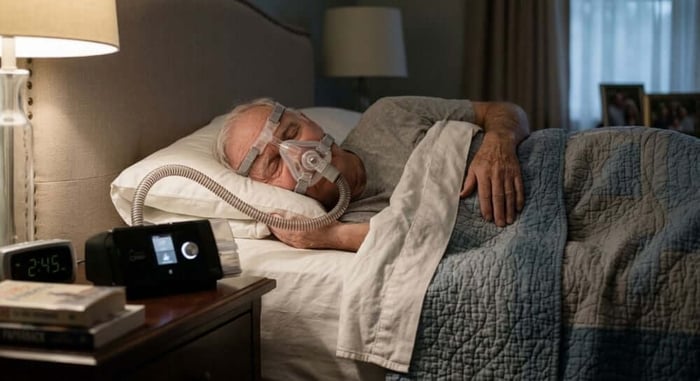

According to American Academy of Sleep Medicine estimates, nearly 30 million Americans live with sleep apnea. Roughly 80% of them don't know it, and the economic impact was a staggering $150 billion as far back as 2015.
If you're caring for someone who snores heavily, gasps awake at night, or is exhausted no matter how much sleep they get, this article is for you. Whether your loved one already has a diagnosis and a new machine sitting in its box, or you're starting to suspect something's wrong, understanding the basics can turn a confusing medical device into a manageable part of the daily routine.
Understanding the Types of Sleep Apnea
Not all sleep apnea is the same, and knowing which type your loved one has shapes everything from treatment to what "normal" looks like at night.
- Obstructive Sleep Apnea (OSA) is by far the most common form. The airway physically collapses or becomes blocked — often by the tongue or soft palate — repeatedly throughout the night. This is the type most associated with loud snoring, choking sounds, and gasping awake.
- Central Sleep Apnea (CSA) works differently. Instead of a blockage, the brain simply stops sending the signal to breathe. It's less common, doesn't usually involve snoring, and is more often linked to conditions like heart failure.
- Complex Sleep Apnea is a combination of both — obstructive episodes that persist or central episodes that emerge even after treatment has started. It requires closer follow-up with a sleep specialist to get the therapy right.
💡 Caregiver Tip: A home sleep study or an in-lab polysomnography is the only way to know for certain which type your loved one has. If you notice new or worsening symptoms after CPAP therapy has already started, mention it at the next appointment because it could signal a shift toward complex sleep apnea.CPAP vs. BiPAP: What's the Difference?
Once a diagnosis is confirmed, the doctor will typically prescribe one of two types of positive airway pressure (PAP) therapy:
- CPAP (Continuous Positive Airway Pressure) delivers one steady stream of air pressure throughout the night, keeping the airway propped open. It's the standard first-line treatment for most people with OSA.
- BiPAP (Bilevel Positive Airway Pressure) delivers two different pressures — a higher one to help draw air in, and a lower one that makes it easier to exhale. It's often prescribed for people who feel like they're "fighting" the machine on a CPAP, or for those managing more complex conditions like COPD alongside sleep apnea (a pairing we covered in The Compounded Conundrum – Incontinence and COPD Therapies).
Neither machine is "better" across the board — it comes down to what a person's airway and breathing pattern actually need, which is a conversation for their sleep physician, not a personal preference.
Choosing the Right Mask
If the machine is the engine, the mask is where therapy succeeds or fails — a poor-fitting mask is one of the top reasons people give up on CPAP therapy altogether. There are three main styles:
- Nasal masks cover just the nose and work well for people who naturally breathe through it. They're a common starting point for new users.
- Nasal pillow masks are small, lightweight inserts that sit right at the nostrils. They're popular with people who feel claustrophobic in a bigger mask, wear glasses, or have facial hair that makes a full seal difficult.
- Full-face masks cover both the nose and mouth, making them the go-to for anyone who breathes through their mouth at night or deals with frequent nasal congestion.
Sleep position matters too — side and stomach sleepers often do better with a low-profile nasal or pillow mask, while back sleepers have more flexibility. If your loved one wakes up with dry mouth, a whistling sound, or red marks on their face, it's usually a sign the mask style or fit needs a second look, not that CPAP therapy itself isn't working.
Keeping Equipment Clean
CPAP equipment is warm, moist, and used every single night — exactly the environment mold and bacteria thrive in. A simple routine keeps it safe and comfortable:
- Daily: Wipe the mask cushion with a damp cloth or CPAP-safe wipe, and empty and rinse the humidifier chamber.
- Weekly: Wash the full mask, headgear, and tubing in warm water with a mild, fragrance-free soap, then let everything air-dry completely before the next use.
- Ongoing: Replace filters, cushions, and tubing on the schedule your equipment manufacturer recommends. Worn-out parts lose their seal and let the therapy quietly become less effective.
💡 Caregiver Tip: Skip specialty CPAP cleaning machines that use ozone or UV light — they haven't been proven safe or more effective than plain soap and water, and some can damage equipment.When to Call the Doctor
Most CPAP therapy adjustment periods are simply that — an adjustment. But it's worth a call to the sleep physician if your loved one experiences ongoing mask leaks that won't resolve, new or worsening pauses in breathing despite consistent use, chronic dry mouth or nosebleeds, or if they're avoiding the machine altogether. Therapy that isn't being used isn't therapy, and there's almost always a fixable reason behind it.
Conclusion
Living with sleep apnea, or caring for someone who does, often starts with a steep learning curve: new equipment, new routines, and nights that suddenly look and feel very different. But it gets easier. Once you find the right mask and the cleaning routine becomes second nature, CPAP therapy tends to fade into the background of daily life, quietly doing its job while your loved one gets the deep, restorative sleep their body has been missing.
LL Medico is here to help. With over 30 years of experience supporting caregivers and the people they love, we carry a full range of respiratory care products, from CPAP masks and tubing to cleaning supplies and filters, alongside the adult diapers and personal care supplies many of our caregiver families also rely on. If you have questions about finding the right fit for your loved one's equipment, call us at (855) 422-4556 or email support@llmedico.com, we're always happy to help.
In closing, let’s consider the words of Thomas Dekker, "Sleep is the golden chain that ties health and our bodies together." A single good night's sleep can't undo months of exhaustion, but it's where the recovery always begins, and every small adjustment that gets your loved one closer to it is worth the effort.Download free printable caregiver resources
FAQs
How long does it take to get used to a CPAP machine?
Most people adjust within a few weeks of consistent nightly use, though it can take longer. Sticking with it, even on rough nights, is the biggest factor in long-term success.
Can someone with sleep apnea sleep without their CPAP occasionally?
It's best to use it every night, including naps. Even short gaps can bring symptoms — and the associated risks — right back.
Why does my loved one's mouth feel so dry every morning?
This is often a sign of air leaking around the mask or mouth-breathing during sleep. A heated humidifier, chin strap, or switch to a full-face mask can usually solve it.
Is a CPAP machine loud?
Modern CPAP machines are designed to run quietly — most produce less noise than a whirring fan. A loud or whistling machine usually points to a leak or a maintenance issue.
Can CPAP therapy be used with a pacemaker or other medical devices?
Generally yes, but it's always worth confirming with the prescribing doctor, especially when multiple conditions and devices are being managed together.
What happens if my loved one travels?
Most CPAP machines are compact and TSA-approved for carry-on travel. Portable travel CPAP units are also available for extended trips or vacations.
How often should CPAP supplies be replaced?
As a general guideline, mask cushions every 1–3 months, filters monthly, and tubing every 3–6 months — though your equipment manufacturer's guidance and insurance resupply schedule should take priority.
Does insurance cover CPAP machines and supplies?
Most insurance plans, including Medicare, cover CPAP therapy when prescribed following a sleep study, though compliance requirements (consistent nightly use) often apply during the first few months.