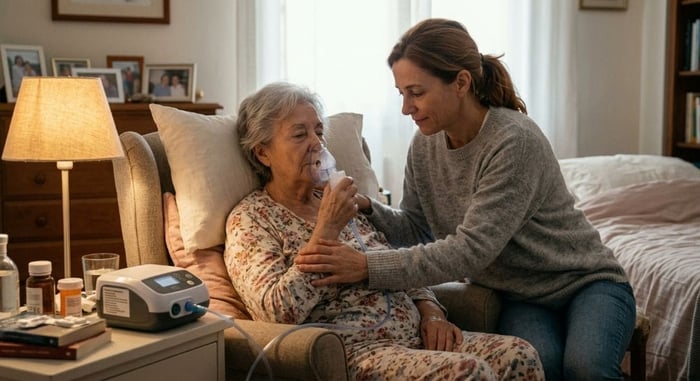

In home respiratory care brings a different rhythm to caregiving than most other conditions. Breathing is constant, which means the condition is constant too. There's no real "off" period, and a caregiver learns to read small changes in breathing the way others might read a mood or an expression.
You are far from alone in this constant vigil. According to this American Lung Association article, chronic lower respiratory conditions like COPD affect over 12.5 million adults in the United States, placing immense daily responsibilities on family caregivers..Furthermore, data from the Centers for Disease Control and Prevention show that COPD alone leads to over 850,000 emergency department visits each year. This is a stark reminder of how quickly breathing challenges can escalate, and how critical steady home management really is.
Whether you're caring for someone with COPD, sleep apnea, asthma, or another condition affecting the lungs, the fundamentals of good respiratory caregiving are surprisingly consistent, even though the conditions themselves differ.
This guide covers that common ground: understanding what you're caring for, setting up a home environment that supports easier breathing, building a daily monitoring routine, understanding different equipment options, and recognizing when something needs urgent attention.
From here, we'll be publishing focused guides on individual conditions and equipment, starting with our first piece on Understanding Sleep Apnea and CPAP Therapy. So, think of this as the large-scale map, with the more detailed routes to follow.
Understanding the Condition You're Caring For
Respiratory conditions vary widely in how they present and how they're managed, but they generally fall into a few broad categories: obstructive conditions like COPD and asthma, where airflow is restricted; sleep-related breathing disorders like sleep apnea, where breathing is disrupted during sleep specifically; and conditions requiring supplemental oxygen, where the lungs can't maintain adequate oxygen levels on their own. Some patients live with more than one of these at once, which can make symptoms harder to separate and treatment plans more layered.
Understanding the specific diagnosis matters less for day-to-day in home respiratory care than understanding the specific triggers, warning signs, and treatment routine that come with it. Talk with the patient's pulmonologist or primary care provider about what "normal" looks like for this particular condition, what changes should prompt a call to the doctor, and what changes mean something more urgent. That baseline is the single most useful thing you can walk away from a doctor's appointment with.
Setting Up a Breathing-Friendly Home
The home environment plays a bigger role in respiratory caregiving than it does for many other conditions, because air quality itself is part of the treatment. A few adjustments make a meaningful difference:
Reduce airborne irritants where possible. Dust, strong fragrances, aerosol sprays, and smoke can all aggravate sensitive airways. Regular vacuuming with a HEPA filter and keeping windows open when outdoor air quality allows can help keep indoor air cleaner. Maintain comfortable humidity levels, since air that's too dry can irritate airways while air that's too humid can encourage mold growth; a humidifier or dehumidifier, used appropriately for the season, helps keep this balanced.
Arrange the living space to minimize exertion, especially for patients who become breathless easily. Keeping frequently used items within easy reach and avoiding unnecessary stairs can reduce the physical strain of daily activities. Consider air purifiers in bedrooms or main living areas, particularly if allergens or pollutants are a known trigger for the patient's condition.
None of these changes need to happen all at once. Start with what seems most relevant to the specific condition and fits the budget, then build from there.
Building a Daily Monitoring Routine
Respiratory conditions often progress or fluctuate gradually, which makes consistent monitoring valuable even on days that feel unremarkable. A simple daily routine might include checking oxygen saturation with a pulse oximeter if one has been prescribed, noting any changes in breathing rate, effort, or sound (wheezing, crackling, or unusual coughing patterns), tracking medication and equipment use to ensure nothing is missed, and paying attention to sleep quality, since poor sleep is often an early sign that a respiratory condition needs attention.
Keeping a log of key daily observations makes it far easier to notice a gradual pattern that might not be obvious day-to-day, and gives the patient's care team something concrete to review at the next appointment rather than relying on memory alone.
📥 Download This Guide: For an easy way to track breathing patterns, download our free Weekly Breathing Log.
Understanding Equipment Options
Respiratory care often involves using equipment, and getting comfortable with it is part of the caregiving role. CPAP or BiPAP machines are common for sleep-related breathing disorders, nebulizers and inhalers deliver medication directly to the lungs for conditions like asthma and COPD, and supplemental oxygen concentrators or tanks support patients whose oxygen levels need consistent assistance.
Equipment requires maintenance such as scheduled cleaning, replacing filters and checking tubing for leaks. Staying on top of this maintenance is as important as using the equipment correctly in the first place. We'll cover individual pieces of equipment in more depth in upcoming guides.
Recognizing When to Seek Help
Day-to-day in home respiratory care is mostly about steady consistency rather than emergencies, but knowing the difference matters. Gradual changes such as increased breathlessness during normal activities, a persistent new cough, changes in mucus color or amount, or increased fatigue are normal in most cases, and these can be addressed during scheduled appointments.
However, severe symptoms such as bluish lips or fingertips, chest pain, confusion, or breathing that's rapid, labored, or simply doesn't improve with usual treatment should be treated as an emergency. When in doubt, it's always better to call and be told it's nothing than to wait on something that isn't.
Caring for Yourself as a Caregiver
Respiratory caregiving can be subtly demanding in a way that's easy to underestimate, precisely because it's so continuous. Build in a support network, whether a family member who can step in for a few hours, a local caregiver support group, or simply protected time to rest.
A caregiver who's running on empty is less able to notice the subtle changes that matter most, so looking after yourself isn't separate from looking after your loved one; it's part of the same job. It’s not selfish; it’s essential.
Every respiratory condition is different, but the caregiving fundamentals of understanding the specific condition, building a supportive home environment, monitoring consistently, and knowing when to escalate, apply across nearly all of them.
At LL Medico, we understand that caregiving often means juggling more than one need at once, and comfort and dignity matter across every part of daily care. Alongside our range of respiratory care supplies, we also offer a variety of adult diapers to provide reliable comfort for patients managing incontinence, mobility devices to help those with reduced breathlessness tolerance, and much more.
If you have questions about caregiving for a respiratory condition or, indeed, any of our products, reach out to LL Medico at (855) 422-4556 or email support@llmedico.com. We're here to help. One day at a time.
As Christopher Reeve once said, "A hero is an ordinary individual who finds the strength to persevere and endure in spite of overwhelming obstacles." Caregiving asks for exactly that kind of quiet, daily strength, exactly the strength you're already showing.
📥 Download This Guide: For a printable summary to keep on hand, download our free In Home Respiratory Care Quick Reference Guide, covering daily priorities, warning signs to watch for, and when to call the doctor.FAQs
What's the difference between COPD, asthma, and sleep apnea?
COPD and asthma are obstructive conditions that restrict airflow in the lungs, while sleep apnea is a sleep-related breathing disorder where breathing repeatedly stops and starts during sleep — they can occur separately or together in the same patient.
How can I improve air quality at home for someone with a respiratory condition?
Reducing airborne irritants like dust and strong fragrances, maintaining balanced humidity, and using a HEPA air purifier in main living areas are all effective, low-cost starting points.
What should I track in a daily respiratory monitoring log?
Oxygen saturation (if a pulse oximeter is prescribed), any changes in breathing rate or sound, medication and equipment use, and sleep quality are the most useful daily data points.
How often does respiratory equipment need maintenance?
It varies by device, but most CPAP machines, nebulizers, and oxygen equipment have manufacturer-recommended cleaning schedules and filter replacement intervals — check the specific device's manual, since intervals differ.
What symptoms mean I should call 911 rather than the doctor's office?
Bluish lips or fingertips, chest pain, confusion, or breathing that's severely labored and not improving with usual treatment all warrant immediate emergency care.
Where can I learn more about specific respiratory conditions and equipment?
We're publishing focused guides on individual conditions and equipment over the coming months — starting with our existing guide to sleep apnea and CPAP therapy — so check back for more in-depth coverage.