
For most people, walking is something so automatic that it barely earns a second thought. Until it becomes difficult without some form of assistance. And therein lies one of the most emotionally complicated changes that comes with aging - the transition from walking independently to needing mobility aids for seniors.
It is not simply about needing support. For many older adults, it can feel like a visible marker of lost independence, a line they were not ready to cross. Yet mobility challenges are incredibly common.
According to Centers for Disease Control and Prevention data, falls are the leading cause of injury-related hospitalization among seniors, and around 14 million, or one in four older adults, fall each year. At the same time, the National Institute on Aging notes that changes in muscle strength, balance, joint flexibility, and reaction time can significantly affect mobility as people age.
The important thing to understand is that using a mobility aid is not a surrender. In fact, quite the opposite. In many cases, it is the very thing that preserves independence by reducing fall risk, easing pain, and allowing people to stay active longer. The challenge is knowing when the time has come and how to make that transition with dignity.
Recognizing the Signs
It’s highly unlikely that you’ll wake up one morning and suddenly need a walker. The transition is usually gradual.
It may begin with subtle changes such as taking longer to stand up, reaching for furniture while walking, avoiding stairs, or hesitating before stepping off a curb. Some people start shortening their walks or declining outings altogether because moving around feels less secure than it once did.
The warning signs are subtle and may initially feel like minor adjustments that are easily dismissed. This is, however, your body’s way of saying it needs more support, and ignoring the signals can bring on other trouble.
The Emotional Hurdle
For many seniors, the resistance to mobility aids has very little to do with the device itself. It is what it represents. Some seniors will worry about how others see them, while others fear it will make them feel weaker, not stronger.
Families often struggle here too. Encouraging a parent to use a cane or walker can feel awkward, almost like asking them to admit vulnerability. But framing matters. A mobility aid is not a symbol of decline. It’s a tool, just like eyeglasses, hearing aids, or medication. Its purpose is not to limit life, but to support it.
That distinction can change everything.
Choosing the Right Mobility Aid
One of the biggest mistakes people make is choosing a mobility aid based on appearance rather than need.
A cane may work well for someone with mild balance issues or occasional weakness. It offers light support and can improve confidence during short walks.
A walker provides more stability and is often better suited for those with significant balance concerns, leg weakness, or recovery from surgery.
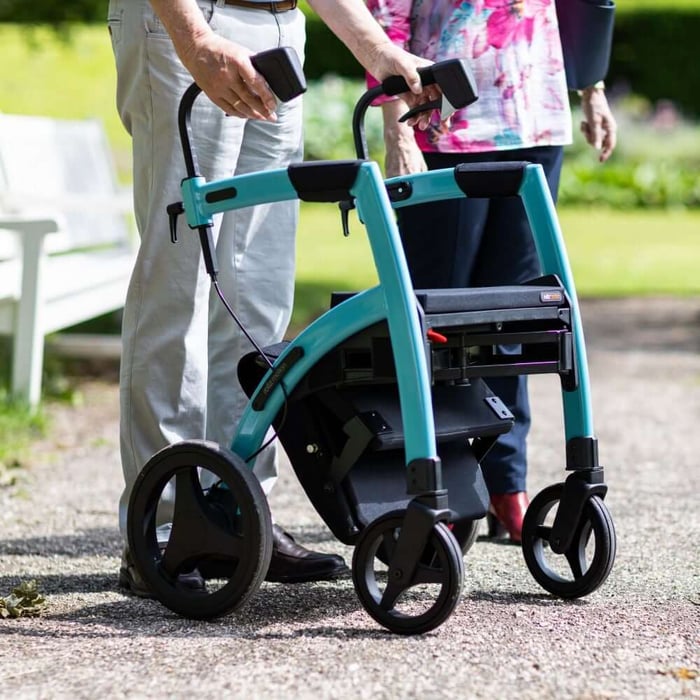
Rollators, walkers with wheels and seats, have become increasingly popular because they offer both mobility and rest. They can be particularly useful for seniors who tire easily but still want to stay active.
The choice depends on several factors:
- How steady the person feels.
- Whether the weakness is on one side or both.
- How far they typically walk.
- Whether they need to sit and rest.
- What their home environment looks like.
A physical therapist or doctor can often help determine the safest option. The guidance is well worth it.
When the Time is Right
Waiting until after a fall is probably the most common mistake people make in deciding when mobility aids have become necessary. And, it’s totally understandable. Most people hope they can “manage just a little longer.”
But a fall can change everything. A fractured hip, a head injury, or even the fear of falling again can create a dramatic loss of confidence. Sometimes the emotional fallout of a fall lingers longer than the physical injury.
Transitioning earlier, before a major incident, can preserve both physical ability and confidence. As Benjamin Franklin said, “an ounce of prevention is worth a pound of cure.”
Adjusting to the New Normal
Using a mobility aid takes practice and, at first, it may be awkward. Simple things like navigating narrow hallways, carrying items while walking or getting up from chairs suddenly require a new approach.
This can frustrate even the most patient person.
There may also be practical adjustments to make at home. Rugs now become tripping hazards, furniture may need to be moved, or grab bars and a raised toilet seat may be needed in the bathroom.
These changes aren’t about limitation. They’re about adapting the environment to match changing needs. In many cases, those changes help preserve quality of life and should be welcomed.
The Social Impact
One of the less obvious risks of declining mobility is isolation. When walking becomes difficult, many older adults start declining invitations, skipping errands, or staying home more often, leading to loneliness, depression, and physical deconditioning.
Ironically, mobility aids for seniors can help prevent this. A cane or walker may restore confidence and make a trip to the grocery store or a walk in the park possible again. And that matters. Because mobility is not just about moving from here to there. It’s about participation and staying connected to life.
Conclusion
Deciding to start using a mobility aid may feel like a major life shift, but it doesn’t mean you have to give anything up. Actually, it’s probably quite the opposite. It helps preserve independence longer, reduces risk, and keeps you engaged in daily life.
The key is seeing mobility aids as practical tools that adapt to changing needs. Aging unavoidably changes the body, but adapting to those changes early on can mean the difference between retreating from life and continuing to participate in it fully.
At LL Medico, we understand how mobility affects nearly every part of daily living. With three decades of experience in the senior care market, we have sourced a range of top-quality mobility aids for seniors and home and bathroom safety products, along with our principal product line, adult diapers.
For further information, feel free to call us at (855) 422-4556 or email support@llmedico.com. On weekdays, between 9 am and 5 pm, we’re also available for a live chat. Our experienced assistants will gladly help you choose the best products for your needs
To conclude, let’s remember the words of innovation strategist Max McKeown, “Adaptability is about the powerful difference between adapting to cope and adapting to win.” Sometimes the strongest step forward is accepting a little support. Because staying steady is what keeps you moving.