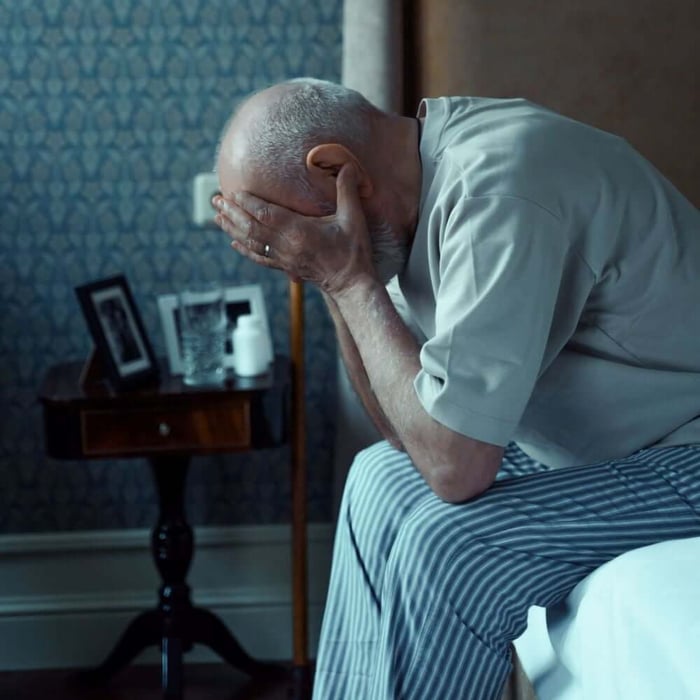

Loneliness is mental, right? It’s an emotional state that arises when you have no friends or you avoid social contact, right? Well, yes and no. Indeed, loneliness begins as an emotional state with a yearning for personal contact and a sadness for not having any.
But what we overlook is that loneliness has a knock-on effect that reaches way deeper than just mood. Researchers and healthcare professionals are increasingly recognizing loneliness as a serious physical health concern, particularly among older adults.
And the problem isn’t insignificant. According to a Centers for Disease Control and Prevention (CDC) article, approximately one in three U.S. adults reports feeling lonely, while about one in four reports lacking adequate social and emotional support. The CDC also notes that loneliness and social isolation are associated with increased risks of heart disease, stroke, dementia, depression, and even premature death.
Older adults face unique challenges that can increase the risk of loneliness. Retirement, reduced mobility, hearing loss, chronic illness, the death of a spouse, and family members moving away can gradually shrink a person's social circle. What begins as occasional solitude can slowly evolve into chronic isolation.
Loneliness is not simply about being alone. Most people enjoy a bit of me-time. Rather, loneliness is the feeling that something is missing: a meaningful connection. And when that feeling persists, the effect on the body can be surprisingly powerful.
Loneliness Is More Than an Emotional State
In the past, loneliness was considered a mental health issue. Today, however, there’s a clearer understanding of how loneliness can affect various systems in the body.
Human beings are social by nature. Our brains and bodies evolved in communities where connection, cooperation, and mutual support were essential for survival. When those connections are absent, the body often interprets the situation as a form of stress.
Unlike short-term stress, which can be helpful in certain situations, chronic loneliness can create a prolonged state of physiological strain. Over time, this ongoing stress response begins to fuel a wide range of health problems.
The Link Between Loneliness and Heart Health
One of the clearest connections researchers have identified is between loneliness and cardiovascular health. People who experience chronic loneliness often have higher levels of stress hormones such as cortisol. Elevated cortisol can contribute to inflammation, increased blood pressure, and changes in how blood vessels function.
These effects may seem small at first, but over several years, they can place additional strain on the heart and circulatory system. The CDC identifies both heart disease and stroke among the major health risks associated with social isolation and loneliness. For older adults who may already be managing hypertension, diabetes, or other cardiovascular conditions, loneliness can become another factor complicating overall health.
Sleep Often Suffers Too
Many people have experienced how difficult it can be to sleep when they are worried, stressed, or feeling emotionally unsettled. Loneliness often creates a similar effect. People who feel disconnected from others frequently report:
- Difficulty falling asleep
- Frequent nighttime awakenings
- Poor sleep quality
- Daytime fatigue
The relationship can become cyclical. Poor sleep affects mood and energy levels, making social interaction more difficult. Reduced social interaction can then deepen feelings of loneliness. For older adults already coping with age-related changes in sleep patterns, this cycle can be particularly challenging.
Loneliness and the Immune System
The immune system also appears to be affected by prolonged loneliness. Researchers have found that chronic social isolation may contribute to increased inflammation and altered immune responses. This may reduce the body's ability to respond efficiently to illness and infection.
For older adults, whose immune systems may already be less robust than those of younger individuals, this can be especially important. While loneliness itself does not cause infections, it may contribute to an environment where overall health becomes more difficult to maintain.
The Surprising Connection to Cognitive Health
Many families think of memory problems and cognitive decline as entirely separate issues from social engagement. In reality, the two are often closely connected. The CDC lists dementia among the conditions associated with social isolation and loneliness.
Social interaction exercises the brain in countless ways. Conversations require attention, memory, language processing, problem-solving, and emotional interpretation. When meaningful interaction decreases, the brain loses some of this regular stimulation.
This does not mean loneliness directly causes dementia. However, evidence increasingly suggests that social connection plays an important role in supporting cognitive health throughout life.
Physical Activity Often Declines
Loneliness frequently changes behavior in ways that affect physical health. Someone who feels isolated may be less likely to:
- Go for walks
- Attend community events
- Participate in exercise classes
- Visit friends and family
- Pursue hobbies outside the home
Gradually, activity levels decline, which can contribute to:
- Muscle weakness
- Reduced balance
- Weight gain
- Increased fall risk
- Reduced cardiovascular fitness
What starts out as a social issue quietly evolves into a physical one.
Chronic Illness and Loneliness Can Feed Each Other
One of the most difficult aspects of loneliness is that it often develops alongside other health conditions.
Consider an older adult living with arthritis. Pain makes it harder to leave the house. Because leaving the house becomes difficult, social activities become less frequent. Reduced social interaction increases loneliness. Loneliness contributes to poorer overall health and reduced motivation.
The cycle continues.
The same pattern can occur with hearing loss, vision impairment, mobility limitations, chronic pain, heart disease, and many other age-related conditions. In fact, experts have noted that chronic illness and loneliness often have a bidirectional relationship, with each making the other more difficult to manage.
How Caregivers Can Help
Caregivers are often the first people to notice changes in social engagement. A loved may suddenly begin declining invitations or stop attending community activities. Phone calls become less frequent, or conversations become shorter. Caregivers can help by paying attention to these subtle shifts and encouraging meaningful social interaction whenever possible.
Importantly, quality matters more than quantity. A few meaningful relationships or activities are often far more beneficial than a full but unfulfilling social calendar. The goal is not simply to keep your loved one busy but to help them maintain a sense of belonging and purpose. For a more detailed look at how you can help your loved one, this CDC informational article offers a wealth of practical, actionable strategies and resources.
Conclusion
Loneliness is often seen as an unfortunate but unavoidable part of growing older. In reality, though, it’s a health issue that deserves the same attention we give to blood pressure, nutrition, mobility, and chronic disease management. The effects reach far beyond emotional well-being, influencing everything from heart health and sleep quality to cognitive function and physical resilience.
Fortunately, loneliness is not an inevitable consequence of aging. Meaningful connections can be built, maintained, and strengthened at every stage of life. Sometimes a simple phone call, a shared meal, a community activity, or a regular visit can make a greater difference than we realize.
At LL Medico, we understand that healthy aging involves more than managing medical conditions. It also means supporting independence, dignity, confidence, and quality of life. From mobility aids and personal care products to adult diapers and other everyday essentials, we strive to help older adults remain active, comfortable, and engaged in the people and activities that matter most.
For more details about our product range, feel free to call (855) 422-4556 or email support@llmedico.com. Our experienced assistants are available from Monday through Friday between 9 am and 5 pm EST.
In closing, let’s remember the words of renowned life coach C.C. Scott. “The human spirit is stronger than anything that can happen to it.” Meaningful relationships help nurture that spirit, reminding us that some of the most powerful medicine in life comes not from a bottle, but from genuine human connection.