
Some health condition pairings feed each other in a way that makes each one more difficult to manage individually. Sleep apnea and hypertension are one such duo. High blood pressure itself is already extremely common in older adults, with a National Center for Health Statistics brief putting the prevalence among adults aged 60 and over at 71.6%.
What's less widely known is how often sleep apnea is quietly driving that blood pressure number. According to the American Heart Association, obstructive sleep apnea (OSA) affects 30 to 50 percent of people with hypertension, and up to 80 percent of those with treatment-resistant hypertension.
In this article, we'll have an in-depth look at how sleep apnea and hypertension interact and compound each other, and what that means for managing both together. If your loved one already has a sleep apnea diagnosis and you want to learn more about the fundamentals of treatment, our Sleep Apnea and CPAP Therapy guide is a good place to start.
How the Two Conditions Feed Each Other
This relationship runs in both directions, which is part of what makes it tricky to untangle. Each time breathing pauses during an apnea episode, oxygen levels drop, and the body responds with a stress reaction, a surge of adrenaline and a spike in blood pressure meant to jolt breathing back into action.
Repeated dozens of times a night, night after night, this repeated stress response gradually pushes baseline blood pressure upward, even during waking hours. Over time, it also contributes to inflammation and blood vessel damage that make hypertension harder to control with medication alone.
On the flip side, although hypertension doesn't directly cause sleep apnea, the two conditions share several of the same risk factors such as excess weight, aging, and fluid retention, which is part of why they turn up together so often. Fluid that shifts to the neck area while lying down can also narrow the airway further in someone who already has sleep apnea, adding another layer to the cycle.
Recognizing the Overlap in Symptoms
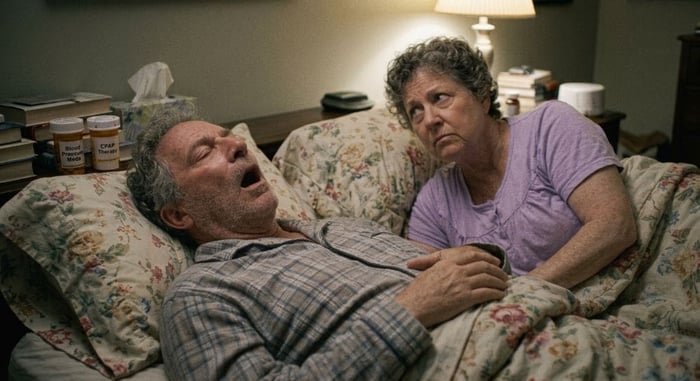
Because both conditions can progress subtly for years before anyone puts the pieces together, it helps to know what to watch for. Signs suggesting sleep apnea include loud, persistent snoring, pauses in breathing during sleep, waking up gasping or choking, morning headaches, and significant daytime fatigue despite a full night in bed. On the hypertension side, watch for blood pressure readings that stay elevated despite consistent medication use, or blood pressure that's notably higher in the morning than expected.
🔎 Look for This: If your loved one takes their blood pressure regularly, an unusually high early-morning reading compared to what you'd typically see later in the day, can be a subtle clue that overnight apnea episodes are driving those spikes.Why This Matters More as We Age
Sleep apnea and hypertension both become significantly more common with age, and so does the overlap between them. Older adults are more likely to have the excess weight, reduced muscle tone, and cardiovascular changes that predispose someone to both. The stakes are higher too; uncontrolled hypertension driven by untreated sleep apnea raises the risk of stroke, heart attack, heart failure, and kidney disease, all of which are already elevated concerns in aging patients. For caregivers, this combination is a good reminder that a blood pressure number alone doesn't tell the whole story. How well someone sleeps matters just as much.
Managing Both Conditions Together
The encouraging news is that treating sleep apnea often improves hypertension, at least to some degree. Research has found that consistent CPAP use is linked to measurable reductions in blood pressure, particularly at night, even though the average effect on daytime readings is modest. These things have been shown to help both conditions at once:
- Consistent CPAP use, if prescribed; inconsistent partial-night use tends to help less than full-night, consistent use
- Weight management, since excess weight worsens both airway narrowing and blood pressure
- Reducing sodium intake, which affects blood pressure directly and can worsen fluid retention that contributes to airway narrowing
- Limiting alcohol and sedatives, especially before bed, since both relax throat muscles and can worsen apnea episodes
- Sleeping on one's side rather than back, which reduces airway collapse for many people with mild to moderate OSA
When to Involve the Doctor
A few situations are worth raising with a healthcare provider directly rather than waiting for a routine visit; blood pressure that remains high despite taking medication as prescribed, new or worsening snoring alongside witnessed breathing pauses, or persistent daytime sleepiness that's affecting safety (drowsy driving, for instance). A sleep study, increasingly available as an at-home test rather than requiring an overnight clinic stay, is the only way to confirm an OSA diagnosis, so don't hesitate to ask directly whether one is warranted.
⏱️ Timing Matters: Blood pressure medications are sometimes more effective when timed around when readings tend to spike — for someone with suspected sleep apnea, that's often the early morning hours. It's worth asking the prescribing doctor whether dose timing should be adjusted while a sleep evaluation is pending.Conclusion
Managing one chronic condition is demanding enough; managing two that actively aggravate each other adds a layer of complexity that's easy to underestimate until you start tracking blood pressure logs and CPAP compliance data side by side. Recognizing the connection is often the turning point and many families find that once the sleep apnea is properly treated, the blood pressure numbers that had felt stubbornly stuck finally start moving in the right direction.
At LL Medico, we know managing overlapping conditions often means juggling more equipment and supplies than any one diagnosis would require on its own, and we're glad to help simplify that, from CPAP supplies and skin care essentials to our full range of adult diapers for whatever else caregiving involves.
And, when ordering multiple products at different intervals, our Autoship feature lets you set up automated orders that will ensure you never run out unexpectedly. With an already challenging caregiver schedule, your supplies will be just one less thing to worry about. For further assistance, call LL Medico at (855) 422-4556 or email support@llmedico.com. Our experienced care team will be glad to help.
As physician and author Atul Gawande has written, "Better is possible. It does not take genius. It takes diligence. It takes moral clarity." Untangling two conditions that feed each other rarely has a single dramatic fix, but consistent, patient effort on both fronts tends to move the needle.
FAQs
Can sleep apnea actually cause high blood pressure, or do they just happen to occur together?
There's a definite causal relationship. The repeated oxygen drops and stress responses during apnea episodes directly raise blood pressure over time.
If my loved one starts CPAP therapy, will their blood pressure return to normal?
Often it improves, especially nighttime readings, but the average effect on daytime blood pressure is more modest. CPAP is usually one part of a broader management plan rather than a standalone fix.
Is a sleep study necessary, or can a doctor diagnose sleep apnea from symptoms alone?
A sleep study is required to confirm an OSA diagnosis; symptoms can strongly suggest it, but treatment decisions are generally based on confirmed test results.
Does losing weight help both conditions?
Absolutely! Excess weight is a shared risk factor for both airway narrowing (worsening apnea) and elevated blood pressure, so weight loss tends to benefit both simultaneously, though it isn't a complete solution on its own for most people.
My loved one's blood pressure stays high despite taking three medications. Could sleep apnea be the reason?
It's genuinely worth asking about — sleep apnea is one of the most common identifiable causes of resistant hypertension, and many people with this pattern have undiagnosed OSA.
Are at-home sleep tests as reliable as an overnight sleep clinic study?
For many patients, home sleep tests are considered reliable for diagnosing moderate to severe OSA, though a clinic-based study may still be recommended in more complex cases — this is a decision best made with the prescribing doctor.
Can alcohol before bed really make sleep apnea and blood pressure worse?
Yes — alcohol relaxes throat muscles, which can worsen airway narrowing during sleep, and it can also interfere with blood pressure regulation, making both conditions harder to manage.
Should CPAP therapy replace blood pressure medication once it's started?
No — CPAP should be treated as an addition to, not a replacement for, prescribed blood pressure management, and any medication changes should only happen under a doctor's guidance.