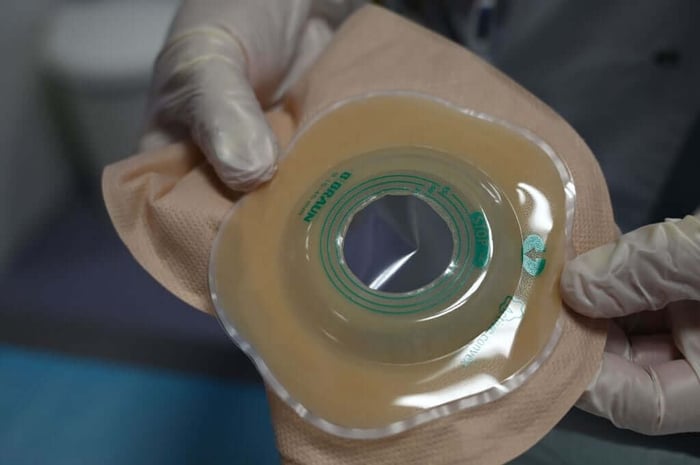

If you're a caregiver supporting someone who has recently had ostomy surgery, or is about to, you're joining a much bigger community than you may have thought. According to the United Ostomy Associations of America (UOAA), between 725,000 and one million Americans are currently living with an ostomy, and roughly 100,000 new ostomy surgeries are performed in the US every year.
An ostomy can feel overwhelming at first, both for the person who has one and for the people helping them adjust. The good news is that with the right information and a bit of routine, living with an ostomy usually settles into something very close to normal. This guide covers the basics: what an ostomy actually is, how the products work, how to care for the skin around it, and how you, as a caregiver, can help without taking over.
What Is an Ostomy?
An ostomy is a surgically created opening, called a stoma, that reroutes waste out of the body when the digestive or urinary system can no longer do so on its own. It's often needed after treatment for colorectal cancer, inflammatory bowel disease (Crohn's or ulcerative colitis), diverticulitis, or traumatic injury. There are three main types:
- Colostomy — an opening from the colon (large intestine), typically producing more solid waste.
- Ileostomy — an opening from the ileum, the lowest part of the small intestine, typically producing liquid waste.
- Urostomy — an opening that diverts urine when the bladder has been removed or bypassed.
Some ostomies are temporary, giving an injured or healing section of the bowel time to recover before being reversed. Others are permanent. Either way, waste is collected in an external pouch worn over the stoma rather than passing through the body in the usual way.
The Emotional Adjustment
An ostomy changes how someone relates to their own body, and that adjustment period is real. Feelings of self-consciousness, grief, or anxiety about how others will react are common in the first weeks and months.
Here's the reassuring part. Under clothing, an ostomy pouch is typically unnoticeable, and most people return to nearly all of their previous activities, including sports. Professional athletes have played entire careers while living with an ostomy, and ostomates regularly complete marathons and triathlons. Every October, the UOAA marks Ostomy Awareness Day specifically to push back against the stigma and isolation that still surround this surgery, a sign of how common and manageable the experience really is.
As a caregiver, your role in this part of the adjustment matters more than any product ever will: normalizing the situation, avoiding language that implies fragility or restriction, and giving your loved one space to feel frustrated without rushing them toward "positive thinking" before they're ready.
Understanding the Pouching System
Every ostomy pouching system has two core parts:
- The skin barrier (or wafer) — the adhesive layer that sits directly against the skin, creating a seal around the stoma and protecting the surrounding skin from waste.
- The pouch — attached to the barrier, this collects waste and is emptied or replaced as needed.
Systems come in two main styles. A one-piece system has the barrier and pouch fused together, and the whole unit is removed and replaced as one. A two-piece system keeps the barrier in place for several days while the pouch itself snaps or clicks on and off, useful for people who want to change the pouch more often than the barrier, since the barrier is generally gentler on skin the less it's removed.
There's no single "right" choice; body shape, stoma location, skin sensitivity, and personal dexterity all factor in, and it's common to try a couple of options before settling on what works. For more information on how to choose between one- and two-piece pouching systems, read this article.
Skin Care Around the Stoma
This is where most day-to-day problems happen. According to a Journal of Wound, Ostomy and Continence Nursing review, as many as 70% of ostomates experience some form of stomal or peristomal (around-the-stoma) skin complication. The most common culprit is moisture-associated skin damage, irritation caused by waste making prolonged contact with skin, often from a barrier that doesn't fit quite right.
A few habits go a long way toward preventing it:
- Measure the stoma regularly, especially in the weeks after surgery — stoma size can change as swelling goes down, and a barrier opening that's too large exposes skin to waste.
- Clean gently with water alone (or a product specifically made for peristomal skin). Soaps, alcohol-based wipes, and moisturizers with oils can interfere with adhesion.
- Let skin dry fully before applying a new barrier.
- Change the pouching system on a consistent schedule rather than waiting for a leak, since a failing seal often gives warning signs (itching, stinging) before it fails outright.
- Watch for redness, rash, or breakdown and address it early — small irritations are much easier to resolve than skin damage that's had time to set in.
Daily Life, Diet, and Staying Active
Most people can eventually return to a normal diet, though the first few months often call for some caution, introducing high-fiber, gas-producing, or hard-to-digest foods gradually rather than all at once, and chewing thoroughly. Staying well hydrated matters more than usual, particularly for anyone with an ileostomy, since more fluid is lost through the stoma than through typical digestion.
Beyond diet, there's genuinely very little an ostomy prevents someone from doing. Bathing, swimming, exercise, travel, and intimacy are all still part of a normal life with an ostomy; they may just take a small amount of extra planning at first (a spare pouching kit in a travel bag, for instance) that becomes second nature quickly.
Supporting a Loved One With an Ostomy
If you're the caregiver rather than the ostomate, your most useful role often isn't hands-on pouch care at all; many people manage their own ostomy independently once they're past the initial recovery period. Instead, caregivers tend to help most with:
- Logistics in the early weeks — picking up supplies, tracking pouch-change schedules, and helping keep the skin-care routine consistent while everything still feels unfamiliar.
- Being a second set of eyes for warning signs — skin changes, unusual odor, or a pouch that isn't sealing well are easier to catch when someone else is paying attention too.
- Emotional steadiness — not flinching, not over-managing, and following your loved one's lead on how much involvement they actually want.
- Advocacy at medical appointments — especially early on, when there's a lot of new information to absorb at once.
It always seems impossible until it's done, a line usually attributed to Nelson Mandela, and one that fits this particular adjustment better than most. The first pouch change is the hardest; by the tenth, it's routine.
Conclusion
An ostomy is a significant change, but it's one that around a million Americans navigate successfully every year, often going on to live fully active lives. The learning curve is steep in the first weeks, but it flattens out faster than most people expect, and a caregiver who stays informed, steady, and willing to follow their loved one's lead makes that curve considerably shorter.
At LL Medico, we carry a full range of ostomy supplies alongside more than 30 years of experience helping caregivers and families navigate exactly this kind of transition. We also carry a complete line of adult diapers, personal care items, and other everyday caregiving essentials. Give us a call at (855) 422-4556 or email support@llmedico.com. Our team would be happy to help you find the right fit.
As Helen Keller once said, "Character cannot be developed in ease and quiet." Living well with an ostomy isn't about pretending the adjustment is easy — it's about showing up for it, one day at a time, and discovering just how capable you and your loved one really are.
FAQs
Is an ostomy permanent?
Not always. Some ostomies are temporary, giving part of the bowel time to heal before being reversed; others are permanent, depending on the underlying condition.
Can someone with an ostomy live a normal life?
Yes. Most people return to nearly all their previous activities, including exercise, travel, and intimacy, typically with only minor adjustments to routine.
What's the difference between a one-piece and two-piece pouching system?
A one-piece system has the skin barrier and pouch fused together and is replaced as a single unit. A two-piece system keeps the barrier in place for several days while the pouch attaches and detaches separately.
Why does skin around the stoma get irritated?
The most common cause is moisture-associated skin damage, usually from waste making prolonged contact with skin due to a barrier that isn't fitting properly. Regular measuring and a consistent change schedule help prevent it.
How can a caregiver help without taking over?
Focus on logistics, emotional support, and watching for warning signs — most ostomates manage day-to-day pouch care independently once past the initial recovery period, so following their lead matters more than stepping in.