
If you or a loved one is new to ostomy care, one of the first real decisions you'll face, often within days of leaving the hospital, is choosing between a one-piece and a two-piece pouching system. Neither is objectively "better." Each solves the same basic problem in a slightly different way, and the right choice usually comes down to skin sensitivity, stoma output, activity level, and personal preference. We discuss how they differ, and how to choose ostomy pouches that best fit your particular situation. For the broader basics of ostomy care, see our caregiver guide on living with an ostomy.
The Two Core Parts
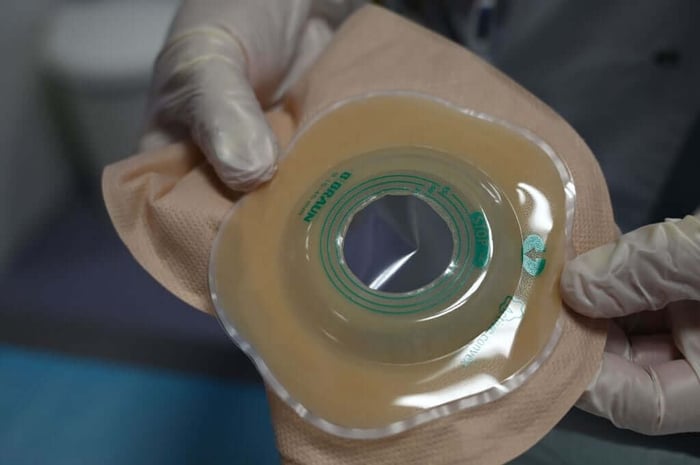
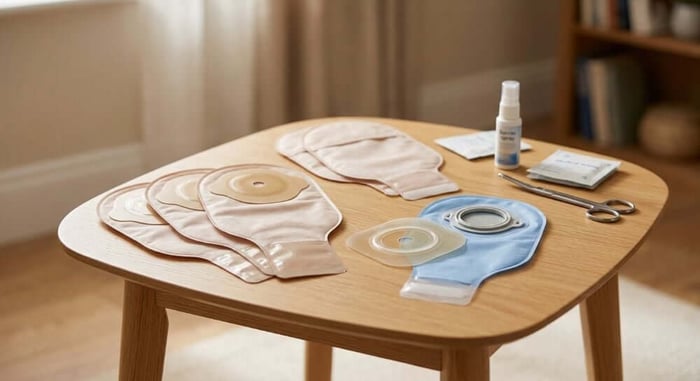
Every pouching system is built from the same two components: a skin barrier (also called a wafer), which is the adhesive layer that sits against the peristomal skin and protects it from waste, and a pouch, which collects the output. The only real question is whether those two parts come fused together or separately — and that's the entire one-piece vs. two-piece distinction, according to Hollister's ostomy learning center.
One-Piece Systems
A one-piece system combines the barrier and pouch into a single, inseparable unit. There's no coupling or snapping involved — you simply apply it and remove it as one piece.
Why people choose it:
- Simplicity. With no flange or coupling ring to line up, there's one less step to get wrong, which is part of why it's often the system patients leave the hospital wearing.
- Lower profile. Without a rigid plastic coupling ring underneath, one-piece systems tend to sit flatter and more discreetly under clothing.
- Often lower cost than an equivalent two-piece system.
The trade-off: every time the pouch needs changing, the barrier comes off too — meaning a full skin re-application each time. For anyone with sensitive peristomal skin, more frequent barrier removal can mean more irritation over time.
Example one-piece options:
Hollister Premier One-Piece Urostomy Pouch, Flat FlexTend Barrier, Transparent, Cut-to-Fit up to 2 1/2" (64mm), 9"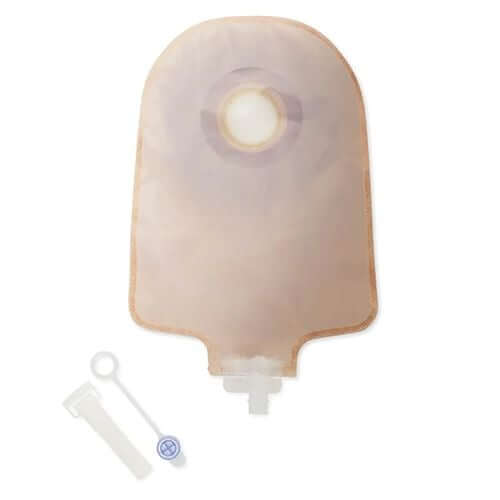 Designed for reliable, all-day protection for urostomy patients who need a dependable drainable pouching system. This transparent, cut-to-fit pouch features the advanced FlexTend skin barrier, an extended-wear material engineered for durability and high resistance to erosion, helping maintain a secure seal between changes.
See it on LL Medico Esteem+ One-Piece Drainable Pouch, Mold to Fit 1.19" to 1.56", 12" Length
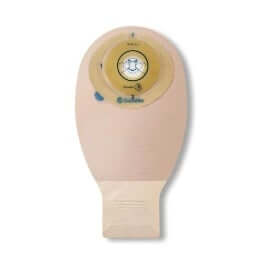
Designed for ostomy patients who want reliable wear time without sacrificing comfort or discretion. Featuring Moldable Technology, the skin barrier is hand-shaped to fit stoma openings from 1.19" to 1.56", helping create a secure seal that supports clinically proven skin and leak protection. See it on LL MedicoColoplast SenSura 1-Piece EasiClose Wide Outlet Ostomy Pouch, Transparent Convex Light with Filter, Cut-to-Fit
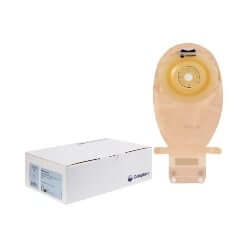 Designed for ostomates who want a dependable, comfortable drainable pouch that adapts to changing body contours. This one-piece system combines a transparent pouch with a light convex barrier, making it easier to monitor stoma output while providing gentle, supportive contact around the stoma for a secure seal. See it on LL Medico
Two-Piece Systems
A two-piece system keeps the barrier and pouch as separate components, connected by a flange or coupling ring — often a plastic ring that clicks into place, similar in feel to snapping a lid onto a container.
Why people choose it:
- The barrier can stay in place for several days while the pouch itself is changed more frequently, which means less frequent skin disruption.
- Flexibility. Some people switch to a smaller, low-profile pouch for exercise or intimacy, then back to a standard pouch for daily wear, all without touching the barrier.
- Easier to inspect the skin. Because the barrier can be applied and checked on its own, some people find it easier to get a precise, well-fitted seal.
The trade-off: two-piece systems are generally bulkier than one-piece systems because of the coupling ring, and there's a small risk of leakage at the junction between the two pieces if the seal isn't seated properly.
Example two-piece options:
SenSura Mio Two-Piece Ostomy Pouch, Drainable, Transparent, Maxi Length
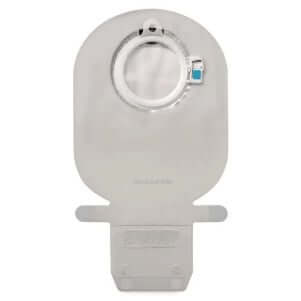
Designed for ostomates who want a secure, comfortable, and discreet drainable pouching system. This transparent, maxi-length pouch pairs with a 60 mm flat SenSura Mio baseplate to provide dependable wear time while allowing easy visual monitoring of output and stoma health. See it on LL Medico
ConvaTec Esteem Synergy+ Two-Piece Drainable Ostomy Pouch, Transparent, 12" Length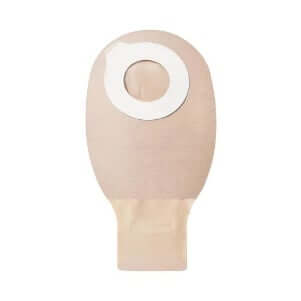
Designed for ostomates who want reliable wear time, discreet comfort, and simple maintenance. This transparent, 12-inch pouch connects securely to its matching skin barrier's clear plastic Landing Zone using a foam adhesive coupling, giving users confidence in a secure, leak-resistant fit throughout the day.
New Image 2-Piece Drainable Ileostomy/Colostomy Pouch, 57mm Flange, 12", Trim to Fit Up to 1 3/4" Stoma
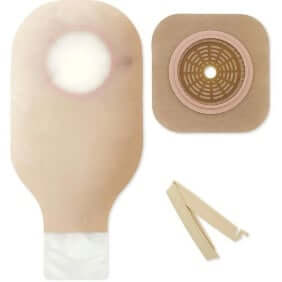 Designed for ostomates who want a reliable, comfortable, and discreet pouching solution. Featuring a 57mm flange and a 12 inch flat pouch length, this system is trim to fit for stomas up to 1-3/4 inch (44mm), allowing for a precise and secure fit around your individual stoma size. The flat FlexWear skin barrier offers standard wear adhesion, keeping the pouch securely in place while helping protect the surrounding skin. See it on LL Medico
A Few Other Factors Worth Knowing
Beyond the one-piece/two-piece decision itself, a couple of related choices tend to come up at the same time:
- Flat vs. convex barriers — a convex barrier curves slightly outward, which can help create a better seal for stomas that sit flush with or below the skin. Your ostomy nurse can advise whether this applies to your situation.
- Drainable vs. closed-end pouches — drainable pouches are emptied and reused throughout the day (more common for colostomies and ileostomies with liquid output); closed-end pouches are removed and discarded whole (more common for more predictable, solid output).
- Standard-wear vs. extended-wear barriers — extended-wear materials are designed to hold up longer against moisture, which can matter for ileostomy or urostomy output specifically.
- Irrigation, for some colostomies — with clinician guidance, some colostomy patients can irrigate on a schedule (a process similar to an enema) and wear a small stoma cap instead of a full pouch between irrigations, according to the United Ostomy Associations of America.
None of these need to be figured out alone; an ostomy nurse (sometimes called a WOC nurse, for Wound, Ostomy, and Continence) is trained specifically to help match a system to your stoma and lifestyle, and most people go through a bit of trial and error before landing on what works.
How to Decide
If you're choosing for the first time, or reconsidering after a rough patch with leaks or irritation, it helps to run through a short list:
- How sensitive is the skin around the stoma? More sensitive skin generally favors less frequent barrier changes — an argument for two-piece.
- How predictable is the output? More liquid or unpredictable output may call for more frequent pouch changes — an argument for the flexibility of two-piece, or a higher-capacity drainable pouch either way.
- How much does profile/discretion matter day to day? One-piece systems typically sit lower under clothing.
- What's the budget? One-piece systems are often the less expensive option per change.
- What does daily life look like? Very active lifestyles, swimming, or intimacy may make the pouch-swapping flexibility of a two-piece system appealing.
There's no wrong answer here, and it's genuinely common to switch systems, or use one type most days and another for specific situations, once you've had a chance to see how your body responds.
Getting this right takes a little patience, but it's a solvable problem, not a permanent guessing game. Most people land on a system that fits well within the first few months and rarely think about the decision again after that.
Conclusion
The early days of ostomy care can feel overwhelming, especially when faced with an unfamiliar array of supplies and decisions right out of the hospital. It is completely normal to feel a bit hesitant as you figure out what works best for your body and your daily routine. Rest assured, though, with a little patience and the right guidance, the learning curve will flatten. What starts off feeling like a complex, daily chore today will soon turn into a simple, predictable routine, restoring both your comfort and your confidence.
At LL Medico, we carry a full range of ostomy products including one-piece and two-piece pouching systems, skin barriers, and peristomal skin care products, backed by more than 30 years of experience helping caregivers and families find the right fit. We also carry a complete line of adult diapers, personal care items, and other everyday senior care requisites. Give us a call at (855) 422-4556 or email support@llmedico.com. Our team would be happy to help you find the right fit.
We close with the words of Lao Tzu: "Knowing yourself is the beginning of all wisdom." There's no universally "right" pouch system; only the one that fits your body, your routine, and your life, and finding it is worth every bit of trial and error.
FAQs
Is a one-piece or two-piece ostomy system better?
Neither is universally better — it depends on skin sensitivity, output type, activity level, and personal preference. Many people try both before settling on what works.
Can I switch between one-piece and two-piece systems?
Yes. It's common to use different systems for different situations — for example, a two-piece for daily wear and a smaller one-piece for exercise or intimacy.
Which system is more discreet under clothing?
One-piece systems generally sit lower profile since they don't have a rigid coupling ring, though modern two-piece systems have narrowed that gap considerably.
How do I know if my skin barrier fits properly?
A properly fitted barrier shouldn't expose skin to output and shouldn't need adjusting more than once every few days. Persistent itching, redness, or leaking are signs it may be time to reassess the fit or system type.
Should I ask a doctor before switching systems?
It's a good idea, especially early on — an ostomy nurse can help match a system to your specific stoma and skin, and can flag anything worth watching for during the switch.