
Fall prevention at home is a very important consideration, especially for caregivers looking after older adults. Falls are the leading cause of injury for adults 65 and older, and they are far more common than most families realize. According to the Centers for Disease Control and Prevention data, over 14 million older adults, about one in four, report falling every year.
The consequences of a fall are also potentially serious. The National Safety Council reports that 43,020 people aged 65 and older died from falls in 2024, while almost 4 million were treated in emergency departments.
The encouraging part is that falls are not simply an unavoidable part of aging. Many of the hazards behind them are sitting in the home, and a surprising number can be fixed with a screwdriver, a night light, or a different arrangement of furniture. This guide walks through the home room by room, with a checklist for each area and the products that make the biggest difference.
How to Run the Audit
It’s best to do the audit with your loved one. Look at each room and try to visualize how they use it. Ask what makes them feel insecure or unsteady in each space. Pay close attention to where they reach for support. If they steady themselves on a countertop, a chair back or a towel bar, that is a sign something needs to be looked at right there.
Start with the cheapest fixes, such as clearing clutter and adding lighting, then move on to the changes that take installation. If time is short, begin with the bathroom and the stairs, where falls tend to be most common and most serious.
📥 Download This Guide: Take the audit with you using our free Home Safety Assessment, a printable room-by-room checklist you can mark up as you go.The Bathroom
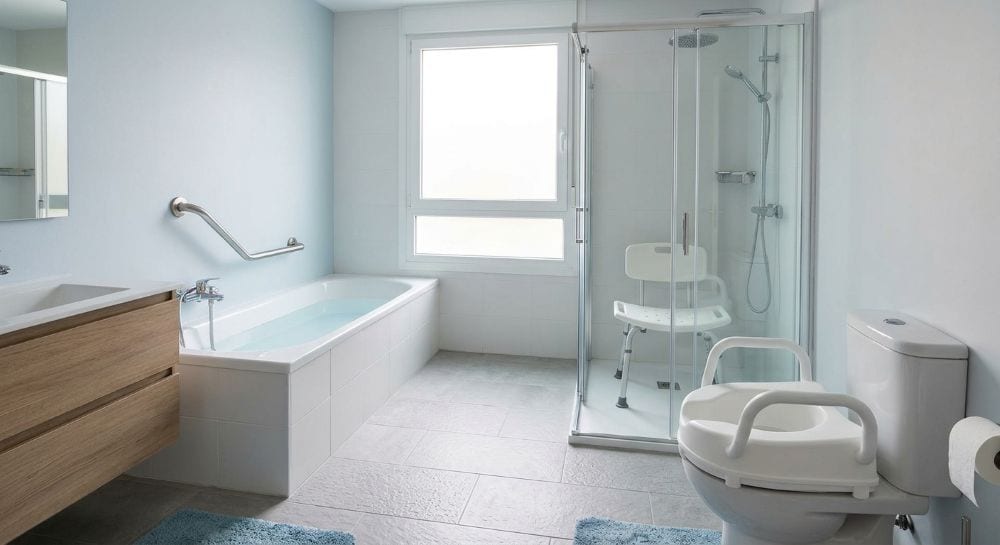
Wet surfaces, hard floors and the need to stand, sit and turn in a small space make the bathroom the highest-risk room in most homes.
- Grab bars beside the toilet and inside and outside the tub or shower, anchored into wall studs
- A raised toilet seat or toilet safety frame if standing up from the toilet is difficult
- A transfer bench or shower chair so bathing can be done seated, along with a handheld shower head
- Non-slip mats inside the tub and a rubber-backed mat on the floor outside
- A night light on the path from the bedroom to the bathroom
- A clear floor with no loose rugs, scales or baskets in the way
🛒 Product Tip: Avoid suction-cup grab bars and towel bars for support. They can release without warning. A true grab bar is screwed into studs or secured with proper wall anchors, and it should hold a person’s full weight.Stairs and Hallways
- Sturdy handrails on both sides that run the full length of the stairs
- Light switches at the top and bottom, with bright, even lighting on every step
- Contrasting tape or strips on step edges so each one is easy to see
- Stairways clear, and carpet or treads firmly secured
- Clear hallways wide enough for a walker or rollator to pass
If the stairs are a constant struggle, it may be time to talk about moving daily living to one floor or looking into a stair lift.
The Bedroom
Nighttime is much riskier than daytime. The person is drowsy, the lights are low, and there is often a rushed trip to the bathroom.
- A bed at the right height, so feet rest flat on the floor when sitting on the edge
- A bed assist handle or rail, if getting in and out takes effort
- A lamp within reach of the bed, plus night lights along the route to the bathroom
- A phone within reach for emergencies
- A clear path with no cords, shoes or laundry on the floor
- Non-slip slippers or shoes kept next to the bed
If urgency or incontinence is behind the night-time trips, managing it with the right products can take the rush out of those moments, and that is a safety measure as much as a comfort one.
The Kitchen
- Everyday items kept between shoulder and knee height, so no one reaches high or bends low
- No step stools or ladders for everyday use
- Spills wiped up right away, with a non-slip mat in front of the sink
- A sturdy chair for seated food preparation
- Good lighting over counters and the stove
Living Areas and Entryways
- Throw rugs removed, or secured with non-slip backing
- Cords moved out of walkways or taped flat along the wall
- Furniture arranged so there is a clear, wide path between rooms
- Chairs with firm seats and arms, at a height that makes standing up easier
- Outdoor steps with handrails, a bright porch light, and a ramp where steps are the main barrier
Mobility Aids and Footwear
A walker or rollator can provide extra stability and significantly boost confidence, but only when it fits right. As a general guide, the handles should sit about at wrist height when the person stands with arms relaxed at their sides. Check that the brakes work, the rubber tips are not worn, and the aid is actually in use rather than left in the corner.
Shoes matter just as much. Choose closed-heel, non-slip soles that fit securely, and avoid walking in socks or loose slippers.
🩺 Ask Your Doctor: Home changes are only part of the picture. Ask the doctor or pharmacist to review medications that can cause dizziness or drowsiness, and ask about vision checks, blood pressure and balance. A referral to a physical therapist for strength and balance work is one of the most useful steps a family can take.What to Do if a Fall Happens
Stay calm and do not rush to pull the person up. Ask whether they are hurt, and if there is severe pain, a head injury, or any trouble moving, call 911. If they seem unhurt, help them rise slowly, using a sturdy chair. Even when there is no injury, mention the fall to the doctor, since it can be a clue that something needs attention.
📥 Download This Guide: Our free Fall Prevention Quick Reference Guide puts the key checks for every room on a single page.Conclusion
A home safety audit may feel like a bit of a chore on an already long list, but it is one of the most useful things you can do for someone you care about. It’s something you only need to do once the first time around and then only at intervals of a year or so, or when something changes. And also, you do not need to fix everything in a weekend. Start with the highest-risk rooms, make steady progress, and remember that each small change lowers the odds of a fall.
At LL Medico, we understand fall risks, and we have made an effort to source a range of items to help mitigate these risks. Many of the items we’ve mentioned in this article are available in our home safety devices and mobility aids collections, including grab bars, raised toilet seats, toilet safety frames, transfer benches, rollators and walkers.
If urgent night-time bathroom trips are also a part of the picture, our adult diapers can take some of the pressure off. Free shipping applies to orders over $49 in the lower 48, and Autoship lets you schedule regular deliveries with 15 percent off your first order and 5 percent off after that.
If you need help choosing the best solutions for your individual needs, call us at 855-422-4556 or email support@llmedico.com. Our experienced assistants are always happy to help.
In closing, let’s reflect on the words of Benjamin Franklin, “An ounce of prevention is worth a pound of cure.” The changes you make today may feel insignificant, but they can make a huge difference in preserving the independence your loved one values most.
FAQs
Where should I start?
Begin with the bathroom, then the stairs, since those are the areas where serious falls are most likely. After that, work through the bedroom and living areas.
Are suction-cup grab bars safe?
They are not recommended for support. Choose grab bars that are anchored into wall studs or secured with proper hardware.
How often should I repeat the audit?
Every six months is a good habit, and any time there is a change in health, medications, or mobility.
What if my loved one resists changes?
Involve them in the choices and start with one or two small fixes. Framing the changes as ways to keep their independence usually goes over better than talking about risk.
Do I need to renovate?
Not usually. Many of the most effective changes, like better lighting, clearing clutter and adding a grab bar, are simple and affordable.