Hi, it's Maria again. If you've read my first story, you'll know how my journey with type 1 diabetes began. In this story, I’ll tell you about what almost twenty years of living with type 1 diabetes has taught me about food, denial, and forgiving myself. This is the part of type 1 diabetes nobody can ever prepare you for.
At the time I was diagnosed with Type 1 diabetes, way back when I was 21, I thought the hardest part would be injecting myself.
I couldn't have been more wrong.
The injections turned out to be the easy part.
It was everything else that nearly broke me.
People often ask me what it's like to live with Type 1 diabetes. My answer is always the same.
It's exhausting.
Not because of the needles. Not because of the finger pricks.
Because every single day is made up of hundreds of decisions that most people never even have to think about.
Before breakfast, I'm already asking myself questions.
What's my blood sugar?
What am I planning to eat?
How many carbohydrates are in it?
How much insulin do I need?
Should I inject now or wait?
Am I walking later?
Am I stressed?
Did I sleep well?
Am I getting sick?
Every answer changes the next decision.
Someone once told me that a person living with Type 1 diabetes makes around 200 extra decisions every day.
After almost twenty years with this disease, I believe it.
Looking back now, I realise those decisions started the moment I walked out of hospital. I thought learning to inject insulin meant I'd mastered diabetes. In reality, I'd only just been introduced to it.
Adjusting To A New Normal
When I came home from the hospital after my diagnosis, I felt overwhelmed.
Everything I thought I knew about life had changed overnight.
Fortunately, my parents did everything they could to make the transition easier.
Our kitchen transformed almost immediately.
White bread disappeared.
Brown bread took its place.
White rice became brown rice.
White pasta became whole wheat.
My dad even bought a little machine for making poached eggs because he'd read they were healthier.
Looking back now, those changes probably made my diagnosis harder for them than for me. They weren't trying to control me. They were trying to help.
Twenty years later, I still live with my parents.
People sometimes find that surprising.
The truth is, diabetes has taught me something about myself.
I'm very good at convincing myself that bad decisions don't matter.
Having my parents around gives me a level of accountability that keeps me a little more honest. Left entirely to my own devices, I know how easy it is for me to drift back into unhealthy habits.
That isn't weakness.
It's self-awareness.
In those early months, though, I was determined not to let diabetes get the better of me. If there was a right way to manage it, I was going to find it.
There Is No Such Thing as a Perfect Diabetic
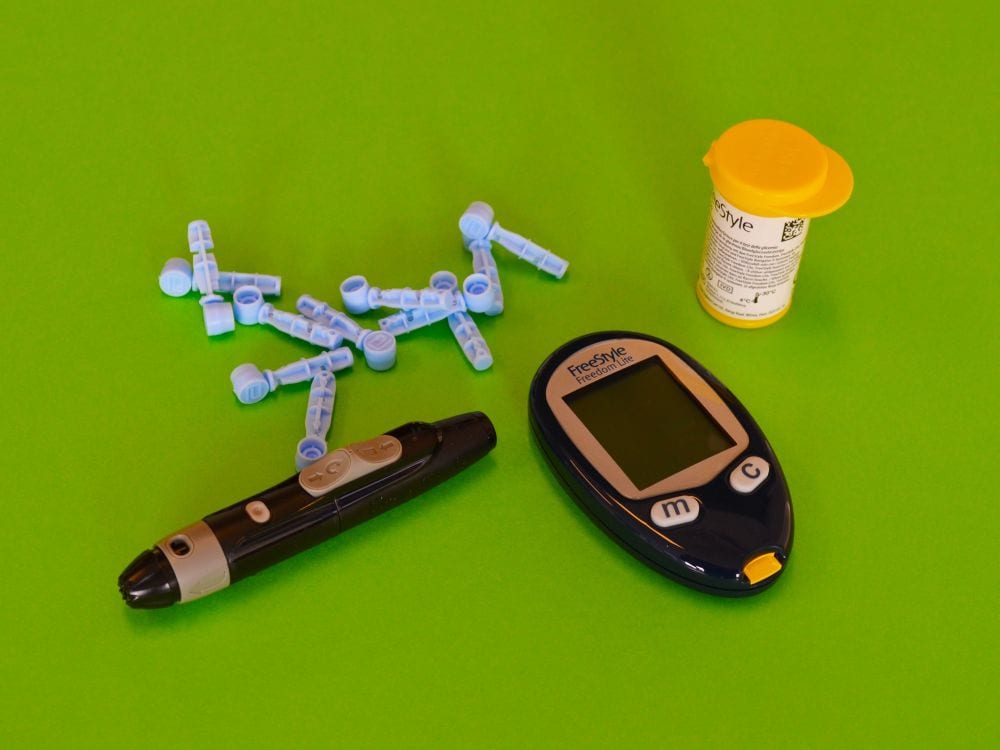
During those first few months, my fingertips looked like they'd been attacked by a sewing machine.
I tested my blood sugar constantly.
I wanted perfect numbers.
Perfect control.
I wanted to be the perfect diabetic.
Eventually, I realized there is no such thing.
Blood sugars have a mind of their own.
Stress affects them.
Hormones affect them.
Illness affects them.
Sleep affects them.
Sometimes they seem to change simply because they feel like it.
I've learned that diabetes isn't about perfection.
It's about showing up every day and doing the best you can.
It took me a long time to learn that lesson. At first, every number that wasn't "perfect" felt like a personal failure. I thought if I just tried harder, planned better or paid closer attention, I'd finally get diabetes under control. Instead, I discovered that diabetes has a way of keeping you humble.
The Problem Isn’t the Needles
People who don't have diabetes usually assume the injections are the worst part.
Honestly?
They're not.
The tiny needles barely hurt.
The real challenge is everything surrounding them.
Calculating carbohydrates.
Working out insulin doses.
Timing your injections.
Correcting mistakes.
Treating low blood sugar.
Trying not to overcorrect and end up too high again.
It's a constant balancing act.
Some days, the easiest thing to do felt like doing nothing at all.
So sometimes...
I didn't.
It wasn't carelessness.
It was burnout.
And burnout quietly opened the door to something far more dangerous.
Denial.
The Dangerous Comfort of Denial
This is probably the hardest part of my story to admit.
For years, denial became my coping mechanism.
Denial meant pretending diabetes didn't exist.
It meant staying out late.
Drinking alcohol.
Eating cake.
Ignoring blood sugar checks.
Skipping insulin.
Living exactly as though I'd never been diagnosed.
It was rebellion.
It was self-destruction.
It was, as I now see it, a very slow suicide mission.
You must understand, denial didn't arrive all at once. It crept into my life one decision at a time. At first, it was skipping the occasional blood sugar check because I was busy. Then delaying an injection because I was out with friends. One missed decision became another, until I was living as though diabetes was someone else's problem instead of my own.
There's another side to this conversation that people rarely talk about.
When people with Type 1 diabetes don't take enough insulin, they lose weight.
That's exactly what happened before I was diagnosed.
And it happened again whenever I neglected my diabetes.
Growing up, I'd absorbed the same message many girls do, that skinny was better.
So suddenly there was a shortcut.
No dieting.
No exercise.
Just dangerously high blood sugar.
Today, I know this behavior has a name: diabulimia.
Back then, I just thought I was being careless.
In hindsight, I understand there was much more going on beneath the surface. At the time, I didn't recognise any of this for what it was. I wasn't trying to harm myself. I was simply overwhelmed, exhausted, and making one bad decision after another. It has taken years for me to understand the emotional side of what I was going through.
Falling off the Wagon
For years, my life followed the same pattern.
I'd decide I was going to take diabetes seriously.
I'd eat well.
Exercise.
Test my blood sugar.
Take my insulin.
I'd become, in my own mind, the "perfect diabetic."
Then life would happen.
A difficult breakup.
A move.
Losing a job.
Something would knock me sideways emotionally.
Slowly, I'd stop paying attention.
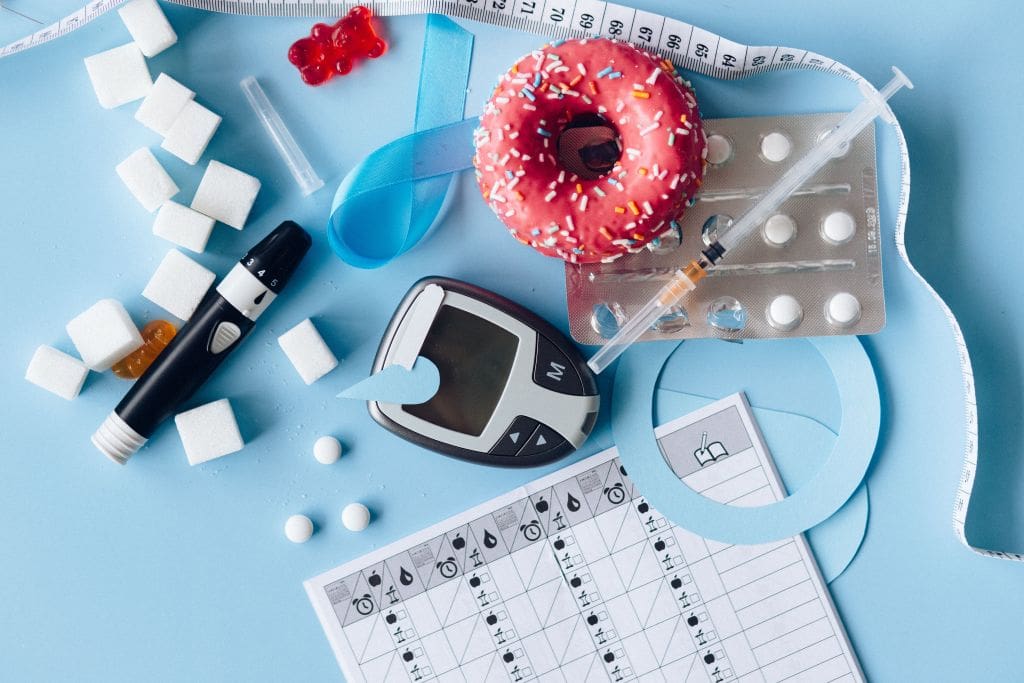
Chocolate pudding.
Potato chips.
Skipping injections.
Ignoring my blood sugar.
Eventually, I'd land in the hospital with diabetic ketoacidosis.
That would scare me straight for a while.
Then the cycle would begin again.
Each hospital admission felt like a fresh start. I'd leave determined that this time would be different. For a while, it usually was. Then, almost without noticing, I'd slip back into the same old habits. Looking back now, I realise I wasn't failing because I didn't care. I was failing because diabetes asks you to care every single day, and sometimes I simply didn't have anything left to give.
People often ask me what finally pulled me out of that pattern.
The honest answer?
I'm not sure anyone is ever completely out of it.
Managing diabetes feels a little like recovery from addiction.
You don't wake up one morning cured.
You wake up and choose again.
Every single day.
That comparison might sound dramatic, but it's the closest I've ever come to explaining what it feels like. Diabetes doesn't disappear because you've had a good week or even a good year. It patiently waits for the moment you stop paying attention.
Cauliflower is the New Rice
I've always loved cooking.
When I was nine years old, my parents gave me my first cookbook, and roast chicken became my specialty.
Food has always been one of my greatest joys.
After my diagnosis, I thought those days were over.
No more pizza.
No more burgers.
No more birthday cake.
Thankfully, I was wrong.
I discovered cauliflower could become almost anything.
Pizza bases.
Rice.
Mashed potatoes.
I learned almond flour could become bread.
Buns.
Cakes.
Cookies.
Were they exactly the same?
Not even close.
But they gave me back something I'd thought I'd lost forever.
Over time, I naturally settled into eating a lower-carbohydrate lifestyle.
Not because someone forced me to.
Because it reduced the mental workload.
Less carbohydrate usually meant fewer calculations, fewer corrections, and fewer opportunities to get things wrong.
Even after twenty years, carbohydrate counting is still one of the hardest parts of diabetes for me.
One of the biggest lessons diabetes has taught me is that managing it isn't about giving up everything you love. It's about finding different ways to enjoy those things. Once I stopped seeing food as the enemy, I started enjoying cooking again. That felt like getting a small piece of my old life back.
High. Low. Repeat.
Of course, changing the way I ate didn't make diabetes any easier to predict.
It still has a habit of reminding me who's really in charge.
Low blood sugar feels like someone has switched off the power to my body.
I shake.
I sweat.
I become ravenously hungry.
In the early years, I'd stumble into the kitchen at two o'clock in the morning, sit on the floor in front of the refrigerator, and eat everything I could find.
Secretly, there was part of me that enjoyed hypos.
They gave me permission to eat all the sweets I'd convinced myself I could never have again.
Of course, I'd usually overcorrect, sending my blood sugar soaring in the opposite direction.
Today, I know better.
I treat a low with glucose, wait fifteen minutes, and test again.
Experience has taught me patience.
High blood sugar is different.
For me, it begins with an intense dry mouth.
Then the exhaustion creeps in.
My legs ache.
My feet hurt.
I could sleep all day and still wake up tired.
I've spent more time in hospitals than I care to remember because I ignored those warning signs.
I've developed kidney disease.
I have neuropathy in my feet.
Some areas have no feeling at all.
Those complications didn't happen overnight. They were the result of years of good decisions, bad decisions, denial, burnout and everything in between. They're a reminder that diabetes is always keeping score, even when we don't.
For a long time, I blamed other people.
Today, I don't.
I take responsibility for the choices I made.
Oddly enough, accepting that responsibility has also allowed me to forgive myself.
That doesn't mean I beat myself up over every mistake I made in my twenties. I can't change those years. What I can do is learn from them and try to make better decisions today than I did yesterday.
Then Technology Changed Everything
When I was diagnosed, managing diabetes meant finger-prick tests and insulin injections.
There were no smartphone apps.
No continuous glucose monitors.
No alarms warning you that your blood sugar was dropping.
You simply guessed.
Or waited for the symptoms to become obvious.
For almost twenty years, that's how I managed my diabetes. Some years were better than others, but I always felt as though I was one step behind it, constantly reacting instead of staying ahead of it. I accepted that this was simply what living with Type 1 diabetes looked like.
Then I moved to Spain.
Living here has transformed my diabetes care.
Through the public healthcare system, I was given a continuous glucose monitor.
Suddenly, I wasn't stabbing my fingertips ten times a day.
My phone told me what my blood sugar was doing.
It warned me before I became dangerously low.
It alerted me when I was climbing too high.
For the first time in years, I felt like I wasn't constantly chasing my diabetes.
People sometimes ask why a little sensor stuck to my arm matters so much.
Because it doesn't just measure my blood sugar.
It removes many of those extra 200 daily decisions.
It gives me breathing room.
And after twenty years of carrying diabetes everywhere I go, breathing room is an incredible gift.
The technology hasn't made me a better person. It hasn't cured my diabetes. It hasn't removed the responsibility that comes with living with this condition. But it has given me information I never had before, and information makes better decisions possible.
I still don't get everything right.
I never will.
There are good weeks.
Bad weeks.
Days when I make excellent choices.
Days when I don't.
I've stopped chasing perfection.
These days, I aim for something much more realistic.
Progress.
If living with Type 1 diabetes has taught me anything, it's this:
You don't have to be a perfect diabetic.
You just have to make one good decision.
Then another.
And another.
And when you inevitably make a bad one, you forgive yourself and start again tomorrow.
When I think back to the twenty-one-year-old who left hospital believing that insulin injections would be the hardest part of diabetes, I can't help but smile. She had no idea what lay ahead. She didn't know about the burnout, the denial, the hospital admissions or the guilt. She didn't know about the lessons she would learn or the mistakes she would make.
But she also didn't know that she would still be here nearly twenty years later. Still learning. Still adapting. Still making many of those 200 extra decisions every day.
The difference is that today, I no longer expect myself to make every decision perfectly. I just try to make the next one a little better than the last.
Supporting Your Journey
Living with type 1 diabetes and the additional, sometimes critical decisions is very challenging. The health consequences of making bad decisions or not making them at all can be extremely severe as we have seen in this inspiring story. The good news is that you don't have to walk this path alone or figure everything out on your own.
At LL Medico, we've spent more than 30 years helping people living with chronic conditions and the family members who care for them. Whether you're looking for diabetes care supplies, wound care products, or nutritional support products, we're here to help you find practical solutions that make everyday life a little easier.
As health needs change over time, many of our customers also rely on our wide range of incontinence products, including adult diapers, as well as hundreds of other home healthcare essentials.
If you'd like friendly, knowledgeable advice, call us at (855) 422-4556 or email support@llmedico.com. We'd be delighted to help you find the products that best suit your needs.