
Table of Contents
- Understanding Vision Impairment
- Common Causes of Vision Loss in Older Adults
- Recognizing the Signs of Vision Impairment
- How Vision Loss Affects Everyday Life
- Creating a Vision-Friendly Home
- Assisting with Daily Living
- Technology That Supports Independence
- Maintaining Mobility and Preventing Falls
- Supporting Emotional Well-Being
- Helping Without Taking Over
- Practical Tips for Caregivers
- Conclusion
- FAQs
Vision influences nearly every aspect of daily life. It allows us to move safely through our homes, prepare meals, manage medications, recognize faces, and enjoy hobbies that enrich our lives. As we age, however, changes in eyesight become increasingly common. While some vision changes are considered a normal part of growing older, others result from chronic eye diseases that can significantly affect independence and quality of life.
For family caregivers, supporting someone with vision impairment involves much more than helping them see better. It means creating an environment where they can continue to live safely, confidently, and with as much independence as possible. Small adjustments around the home, effective communication, and an understanding of the challenges associated with vision loss can dramatically improve daily life for both the caregiver and the person receiving care.
Vision impairment is one of the most common disabilities affecting older adults. According to data from the JAMA Network, around eight million Americans live with vision loss that cannot be corrected with ordinary glasses, contact lenses, medication, or surgery. The prevalence increases sharply among adults over 60 as you can see in the image below.
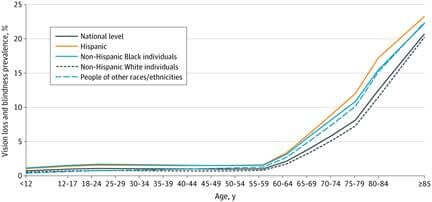 Image courtesy of JAMA Network
Poor vision also has safety implications. The Centers for Disease Control and Prevention identifies impaired vision as a significant contributor to falls among older adults. Falls remain the leading cause of injury-related emergency department visits and hospitalizations for people aged 65 and older.
The encouraging news is that many of the risks associated with vision impairment can be reduced. Appropriate medical care, home modifications, assistive technology, and informed caregiving strategies can help older adults remain active and engaged while preserving their dignity and independence.
Understanding Vision Impairment
Vision impairment is not a disease in itself. Instead, it describes reduced eyesight that cannot be fully corrected through conventional means. The severity varies widely. Some individuals experience only mild blurring that affects reading, while others lose most of their central or peripheral vision.
Understanding the nature of vision loss helps caregivers appreciate why one person may struggle to read a prescription bottle while another has difficulty navigating a familiar hallway.
Vision loss generally falls into several broad categories.
Central Vision Loss
Central vision is responsible for seeing fine details. When this area is affected, reading, recognizing faces, threading a needle, or watching television becomes increasingly difficult.
Age-related macular degeneration is the most common cause of central vision loss among older adults.
Peripheral Vision Loss
Peripheral vision allows people to detect movement and objects outside their direct line of sight. Conditions such as glaucoma gradually reduce side vision, increasing the likelihood of bumping into furniture or missing steps.
Individuals with peripheral vision loss often describe the experience as looking through a tunnel.
Reduced Contrast Sensitivity
Many older adults report that they can still "see," but have difficulty distinguishing similar colors or identifying objects against backgrounds with little contrast.
This explains why a white plate on a white countertop or a light-colored light switch on a cream wall may suddenly become difficult to locate.
Glare Sensitivity
Bright sunlight, glossy floors, reflective countertops, or headlights at night may produce disabling glare.
This problem frequently accompanies cataracts but can occur with other eye conditions as well.
Common Causes of Vision Loss in Older Adults
Although aging naturally affects eyesight, several specific eye diseases account for most significant vision loss.
Age-Related Macular Degeneration
Age-related macular degeneration, commonly called AMD, damages the macula, the central portion of the retina responsible for detailed vision.
People with AMD often retain their peripheral vision but develop increasing difficulty reading, recognizing faces, driving, or performing tasks requiring precision.
The condition usually progresses gradually, allowing individuals to adapt over time, although some forms advance much more rapidly than others.
Modern treatments can slow progression in many cases, making regular eye examinations especially important.
Cataracts
Cataracts develop when the normally clear lens inside the eye becomes cloudy.
Vision gradually becomes blurred, colors lose their brightness, and sensitivity to glare often increases.
Many people compare the experience to looking through a fogged window.
Fortunately, cataract surgery remains one of the safest and most successful surgical procedures performed today, restoring useful vision for millions of older adults each year.
Glaucoma
Glaucoma is frequently called the "silent thief of sight" because it often progresses without noticeable symptoms during its early stages.
Rather than affecting central vision first, glaucoma usually damages peripheral vision.
Because the changes occur gradually, many people remain unaware that they are losing vision until permanent damage has already occurred.
Routine comprehensive eye examinations are critical because early treatment can significantly slow disease progression.
Diabetic Retinopathy
Long-term diabetes can damage the tiny blood vessels supplying the retina. As the disease progresses, blurred vision, dark spots, fluctuating eyesight, and eventually permanent vision loss may occur.
Good blood sugar control, regular eye examinations, and timely treatment have dramatically reduced vision loss among people with diabetes.
Other Conditions
Several additional conditions become more common with age, including:
- Dry eye disease
- Retinal vein occlusion
- Retinal detachment
- Corneal disorders
- Stroke-related vision loss
Although less common than the four major causes, these conditions can significantly affect independence and should never be ignored.
Recognizing the Signs of Vision Impairment
Vision loss often develops so gradually that neither the older adult nor their family notices the changes immediately.
Caregivers are frequently the first to recognize subtle warning signs.
Someone experiencing declining vision may begin holding books unusually close to their face, increasing the television volume because subtitles are difficult to read, or avoiding driving at night.
They may start leaving lights on throughout the house because brighter illumination makes it easier to see.
Missed steps, bumping into furniture, unexplained bruises, or difficulty pouring drinks accurately may also indicate declining eyesight.
Behavioral changes can be equally revealing. A once active individual may stop reading, decline invitations to social events, or become hesitant to cook meals because familiar tasks have become frustrating or unsafe.
Any sudden change in vision should always be treated as a medical emergency. New flashes of light, a curtain-like shadow across part of the visual field, sudden blindness in one eye, or severe eye pain require immediate evaluation by an eye care professional or emergency department.
How Vision Loss Affects Everyday Life
Vision impairment reaches far beyond eyesight itself. It influences nearly every routine activity, often in ways that family members do not initially appreciate.
Medication management becomes considerably more complicated when prescription labels cannot be read clearly. Similar-looking bottles may easily be confused, increasing the risk of medication errors.
Meal preparation also presents challenges. Reading recipes, identifying ingredients, judging whether meat has cooked thoroughly, or safely handling knives all become more difficult.
Personal finances may be affected as well. Reading bank statements, recognizing currency, or identifying fraudulent mail requires visual skills that may no longer be reliable.
Housekeeping can also become frustrating. Dust, spills, and clutter may go unnoticed, gradually increasing fall hazards throughout the home.
Perhaps the greatest impact, however, is on confidence. Many older adults begin limiting activities because they worry about falling, becoming lost, or making mistakes. This gradual withdrawal often leads to reduced physical activity, fewer social interactions, and increased feelings of loneliness.
For caregivers, recognizing these broader effects is just as important as understanding the medical condition itself.
Creating a Vision-Friendly Home
Supporting someone with vision impairment often begins with the home environment. Fortunately, many improvements are inexpensive and can be completed in an afternoon.
The first priority is lighting.
Older eyes require significantly more light than younger eyes, yet excessive brightness can produce uncomfortable glare. Aim for even, consistent lighting throughout the home, particularly in hallways, staircases, bathrooms, kitchens, and entryways. Adjustable task lighting is especially helpful for reading, crafts, medication management, and meal preparation.
Natural daylight should be maximized where possible, but direct glare from windows should be controlled with blinds or curtains.
The next priority is reducing fall hazards.
Loose rugs, electrical cords, footstools, cluttered walkways, and unstable furniture should all be removed or secured. Furniture should remain in consistent locations. Even minor rearrangements can create confusion for someone who has learned to navigate their home by memory.
Contrast also plays an important role. Many people with reduced vision see objects more easily when they stand out from their surroundings. Dark light switches on light walls, contrasting tape along stair edges, brightly colored grab bars, or plates that contrast with the table surface can make everyday activities much easier.
Finally, organization matters. Keeping frequently used items in predictable locations reduces unnecessary searching and helps maintain independence.
Assisting with Daily Living
Supporting someone with vision impairment is about finding the right balance between providing assistance and encouraging independence. It can be tempting to step in and complete every task, particularly when doing so is quicker or seems safer. However, maintaining the ability to perform everyday activities helps preserve confidence, self-esteem, and cognitive function.
Whenever possible, encourage your loved one to complete familiar tasks with appropriate adaptations. Allow extra time, provide verbal guidance when needed, and resist the urge to take over unless safety is a concern.
Personal Care
Daily hygiene often becomes more difficult as vision declines. Identifying toiletries, shaving safely, applying makeup, or adjusting shower controls may require new strategies.
Keep toiletries in consistent locations and consider using containers that differ in shape or texture to make them easier to distinguish by touch. Large-print labels or tactile stickers can also be helpful.
Bathrooms deserve particular attention because wet floors increase the risk of falls. Grab bars, non-slip bath mats, shower chairs, and handheld showerheads all contribute to a safer bathing environment.
Dressing
Choosing clothing may become frustrating when colors are difficult to distinguish or labels cannot be read. Organizing outfits together, using color-identification apps, or labeling drawers with large print can simplify the morning routine.
Adaptive clothing with magnetic fasteners or larger buttons may also be beneficial for individuals who have limited dexterity in addition to vision loss.
Cooking and Meal Preparation
The kitchen is possibly the riskiest area in the home even without any impairments. With poor vision, the risk increases significantly.
Sharp knives, hot surfaces, boiling liquids, and similar-looking food packages all increase the potential for accidents.
Many caregivers find it helpful to:
- Store frequently used ingredients in consistent locations.
- Use measuring cups and spoons with large, high-contrast markings.
- Label pantry items with large-print or tactile labels.
- Choose appliances with large controls or voice guidance.
- Improve task lighting over food preparation areas.
Simple changes often make cooking safer while allowing older adults to continue preparing familiar meals.
Medication Management
Medication errors are one of the greatest risks associated with declining vision. Prescription bottles often look alike, and dosage instructions may be printed in very small text. Missing even a single medication or taking the wrong dose can have serious consequences. Developing a consistent medication routine reduces these risks considerably.
Weekly pill organizers remain one of the simplest and most effective tools for medication management. Many pharmacies also offer large-print prescription labels, easy-open containers, and talking prescription devices for individuals with significant vision loss.
Smartphone reminder apps and voice assistants can announce medication times, reducing the likelihood of missed doses.
Regardless of the system used, medications should remain organized and reviewed regularly with a healthcare provider to eliminate outdated or unnecessary prescriptions.
Technology That Supports Independence
Advances in technology have dramatically expanded the tools available for people living with vision impairment. Many features that once required expensive specialty devices are now built into smartphones and tablets as a standard.
Voice assistants such as Siri, Google Assistant, and Alexa can read messages aloud, set medication reminders, provide weather updates, and control smart home devices without requiring the user to navigate a screen.
Modern smartphones also include accessibility features such as screen magnification, voice control, text-to-speech, and screen readers that convert written information into spoken words.
Artificial intelligence has added another layer of independence. Applications designed specifically for people with low vision can identify objects, recognize faces, read printed documents aloud, describe scenes, identify currency, and even interpret food labels using the phone's camera.
These tools are not intended to replace caregivers, but they can reduce dependence on others for many everyday tasks.
Maintaining Mobility and Preventing Falls
Falls remain one of the greatest concerns for older adults with vision impairment. Rather than limiting activity altogether, caregivers should focus on creating safer opportunities for movement.
Encourage regular physical activity that improves strength, flexibility, and balance. Walking, chair exercises, tai chi, and physical therapy programs can all help reduce fall risk while maintaining mobility.
When walking together, offer your arm instead of taking theirs. This allows the individual to sense your movements naturally while maintaining their own balance.
Describe upcoming changes in terrain such as curbs, stairs, uneven pavement, or narrow doorways before reaching them.
If a mobility aid has been prescribed, ensure it is properly adjusted and used consistently.
Supporting Emotional Well-Being
Vision impairment affects much more than eyesight. It often changes how people see themselves. Many older adults experience frustration, embarrassment, or grief as activities they once enjoyed become increasingly difficult. Some people may stop reading, attending social events, or pursuing hobbies because they no longer feel confident.
Caregivers play an important role in preventing isolation.
Encourage continued participation in meaningful activities by adapting rather than eliminating them. Audiobooks, large-print books, tactile crafts, music, gardening with raised beds, and voice-assisted technology all help individuals stay engaged.
Social connections are equally important. Regular visits with friends and family, participation in community groups, or virtual gatherings can help maintain emotional health and reduce feelings of loneliness.
Sometimes the most valuable support is simply listening. Allow your loved one to express frustration without immediately trying to solve every problem. Acknowledging those feelings can be just as important as offering practical assistance.
Helping Without Taking Over
One of the greatest challenges in caregiving is knowing when to step in and when to step back. Independence contributes to physical health, mental well-being, and self-confidence. Completing everyday tasks, even if they take longer, helps preserve important skills.
Instead of doing everything yourself, ask questions such as:
"Would you like a little help?"
"Would it help if I described what I'm seeing?"
"Would you like me to organize this, or would you prefer to do it yourself?"
These simple questions allow your loved one to retain control while still receiving support when needed.
Practical Tips for Caregivers
Consistency is one of your greatest allies. Keep furniture, household items, and everyday supplies in the same locations whenever possible. Always announce your presence when entering a room, and let your loved one know when you leave. This simple habit avoids confusion and makes conversations feel more natural.
When handing someone an object, describe what it is and place it directly into their hand rather than setting it nearby.
If reading mail or completing paperwork together, describe what you are seeing in detail instead of summarizing it. This allows the individual to remain actively involved in decisions.
Most importantly, remember that vision impairment affects everyone differently. Continue asking what works best rather than assuming every solution will fit every situation.
Conclusion
Supporting someone with vision impairment requires patience, flexibility, and a willingness to adapt. Although vision loss presents new challenges, it does not prevent older adults from living fulfilling, independent lives. Thoughtful home modifications, assistive technology, regular eye care, and compassionate caregiving can significantly improve safety while preserving dignity and confidence.
Many of the most effective changes are surprisingly simple. Better lighting, consistent organization, improved contrast, and clear communication often have a greater impact than expensive equipment. Combined with routine eye examinations and prompt attention to changes in vision, these strategies help create an environment where older adults can continue participating in the activities that matter most.
Having the right supplies readily available also makes everyday caregiving easier. Products such as adult diapers, personal care products, and home and bath safety equipment can help address many of the practical challenges that accompany vision impairment and aging. LL Medico offers a wide selection of these products, allowing caregivers to find dependable solutions that support comfort, safety, and independence at home.
For more information on how we can help, call us at (855) 422-4556 or email support@llmedico.com. Our experienced assistants are available for a call or live chat from Monday to Friday between 9 am and 5 pm EST.
As Helen Keller famously wrote, "The only thing worse than being blind is having sight but no vision." While vision impairment may change how someone experiences the world, compassionate caregiving helps ensure they continue to experience it with confidence, purpose, and connection.
Download Free Printable Caregiver Resources
FAQs
Can vision loss caused by aging be reversed?
Some causes, such as cataracts, can often be treated successfully with surgery. Others, including glaucoma and age-related macular degeneration, generally cannot be reversed, but early treatment may slow progression.
What is considered low vision?
Low vision refers to reduced eyesight that cannot be fully corrected with glasses, contact lenses, medication, or surgery and interferes with everyday activities.
How often should older adults have a comprehensive eye examination?
The appropriate schedule depends on age, medical history, and existing eye conditions. Individuals over 65 should follow the recommendations of their eye care professional, with more frequent examinations if they have conditions such as diabetes or glaucoma.
Does vision impairment increase the risk of falling?
Yes. Reduced vision makes it more difficult to detect obstacles, judge distances, and maintain balance, increasing the likelihood of falls.
Are smartphones useful for people with vision impairment?
Many smartphones include accessibility features such as screen readers, magnification, voice control, and object recognition that can greatly improve independence.
Should someone with vision impairment stop cooking?
Not necessarily. Many people continue preparing meals safely by improving lighting, organizing the kitchen, using adaptive equipment, and making appropriate modifications.
What is low vision rehabilitation?
Low vision rehabilitation teaches people how to maximize their remaining vision through specialized training, adaptive techniques, and assistive devices.
When is vision loss considered a medical emergency?
Sudden vision loss, flashes of light, a curtain-like shadow over the vision, severe eye pain, or sudden double vision require immediate medical evaluation.