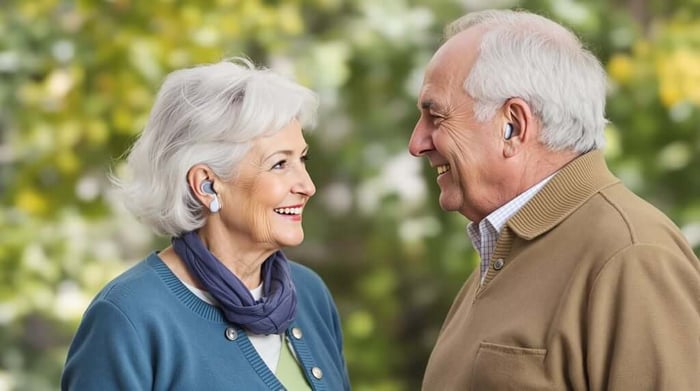

Age-related hearing loss (presbycusis) is one of the most common chronic conditions affecting older adults. According to a World Health Organization fact sheet, more than 430 million adults worldwide live with disabling hearing loss, and prevalence increases significantly with age. A research article published in the National Library of Medicine also shows strong links between hearing loss and social withdrawal, mood changes, and reduced cognitive engagement.
For many families, the hardest part is knowing where to begin. Even the most patient person can feel as if they’re “lost in the weeds” when comparing the features of one hearing aid to another, especially when each option comes with new jargon. The silver lining is that modern devices truly do offer a comprehensive solution when it comes to improving clarity, comfort, and independence.
Today’s devices are smarter, smaller, and more intuitive than anything older generations had access to, and they’re designed to make life feel a little more connected and a lot less stressful. For older adults who want to preserve independence, relationships, and a sense of normalcy, hearing technology, especially properly fitted hearing aids, can make a significant difference. Below is a clear and comprehensive overview to help older adults and their caregivers make sense of what’s out there.
Digital Processing: The Foundation of Every Modern Hearing Aid
The shift from analog to fully digital systems transformed what a hearing aid can do. Digital sound processing allows the device to:
- Distinguish speech from background noise
- Automatically adjust to different environments
- Reduce feedback (the whistling older devices were known for)
- Offer personalized settings based on a hearing evaluation
This means that instead of simply amplifying everything, digital hearing aids make smarter decisions about what you want to hear and what you don’t. That alone can feel like night and day compared to devices of the past.
Rechargeable Batteries: Convenience for Everyday Life
Older adults frequently report frustration with tiny button batteries; difficult to handle, easy to misplace, and quick to drain. Fortunately, many modern hearing aids now include rechargeable lithium-ion batteries.
Benefits include:
- A full day of power on a single charge
- No ongoing battery purchases
- Easy nightly charging routines
- Fewer issues with battery doors or corrosion
Small changes like this can remove big barriers to daily use. After all, a hearing aid only helps if it’s actually worn.
Bluetooth and Smartphone Connectivity
This feature has become a game-changer. Many current hearing aid models pair with smartphones, tablets, TVs, and other devices. This allows users to:
- Stream phone calls directly into the hearing aid
- Listen to music or TV with clearer sound
- Adjust volume and settings discreetly through an app
- Use GPS-based programs that shift automatically (for example, switching to a “favorite restaurant” noise-reduction setting when you arrive)
For older adults who enjoy video calling grandchildren or attending telehealth appointments, Bluetooth-enabled hearing aids make these interactions significantly easier.
Artificial Intelligence and Machine Learning
While “AI” can sound like a buzzword, its role in hearing assistance is surprisingly down-to-earth. AI-enabled hearing aid models learn from real-life user behavior. For example:
- They may identify which environments the wearer finds difficult and optimize automatically.
- They can interpret complex soundscapes, such as busy restaurants or outdoor gatherings.
- Some models even allow “remote fine-tuning,” meaning an audiologist can adjust the hearing aid without requiring an office visit.
For older adults with mobility limitations, or those living in rural areas, remote support is an enormous step forward.
Directional Microphones and Background Noise Reduction
Modern hearing aid technology now uses dual microphones to pinpoint the direction of speech. Rather than raising the volume of everything, the device gives priority to voices in front of the user while reducing noise behind or around them.
This makes everyday situations—like hearing a server at a café or chatting during family gatherings—far less exhausting.
Telecoil and Compatibility with Public Sound Systems
The telecoil feature (also called “T-coil”) isn’t new, but it has seen major improvements. A hearing aid with telecoil can connect with induction loop systems in:
- Churches
- Museums
- Auditoriums
- Banks
- Airports
This allows a user to hear announcements or speeches without background noise. With so many public facilities improving accessibility, it’s a feature worth keeping on the radar.
Over-the-Counter Hearing Aids: A New Doorway to Access
In August 2022, the U.S. Food and Drug Administration (FDA), approved the sale of over-the-counter (OTC) hearing aids. These are intended for adults with mild to moderate hearing difficulties and can be purchased without an audiologist appointment.
Pros:
- Lower cost
- Easier access
- Good entry point for people unsure about traditional devices
Cons:
- Less personalized
- Limited features compared to prescribed models
- No professional fitting unless you seek it separately
While OTC devices aren’t perfect for everyone, they do open the door for many people who might be unable to afford more expensive, prescribed options or who may otherwise “sit on the fence” for months or years.
Practical Tips for Choosing the Right Hearing Aid
Here are some guidelines to avoid feeling overwhelmed:
1. Start with a professional hearing evaluation.
Even with OTC options available, a baseline exam ensures the most appropriate hearing aid selection.
2. Consider lifestyle needs.
Active seniors may prioritize durability and environmental noise control. Homebodies might focus on simplicity and comfort.
3. Try before you commit.
Look for a provider that offers a trial period. Make sure to test the hearing aid in real-world settings.
4. Don’t let stigma discourage you.
Modern devices are discreet, often nearly invisible. And, in any case, a hearing aid supports independence. It’s not a sign of weakness!
5. Keep up with routine maintenance.
Regular cleaning and annual checkups help ensure the hearing aid continues to perform as expected.
Conclusion: Listening Better Means Living Better
Hearing loss might be common, but living with it in silence is no longer necessary. Modern hearing aids offer more options, more comfort, and more control than previous generations could have imagined. Whether someone prefers a simple, entry-level design or wants the “bells and whistles” of Bluetooth, AI, and remote adjustments, today’s innovations offer something for everyone.
At LL Medico, we understand the burden of age-related conditions. We also understand how debilitating hearing impairment can be, on top of the other common conditions. Consequently, for 30 years, we have been striving to lighten that burden by supplying quality care products at competitive prices.
We 0offer free delivery across the continental US, and our Autoship feature helps take the hassle out of stock management. So, for all your adult diapers, nutritional products, diabetic supplies and more, contact us today. Call us at (855) 422-4556 or email support@llmedico.com if you need any assistance. Our experienced assistants are here to guide you.
At the end of the day, better hearing isn’t merely about amplifying sound—it’s about strengthening relationships, boosting confidence, and restoring the simple pleasure of everyday moments. As John Marshall, fourth Chief Justice of the US Supreme Court, said, “To listen well is as powerful a means of communication and influence as to talk well.”