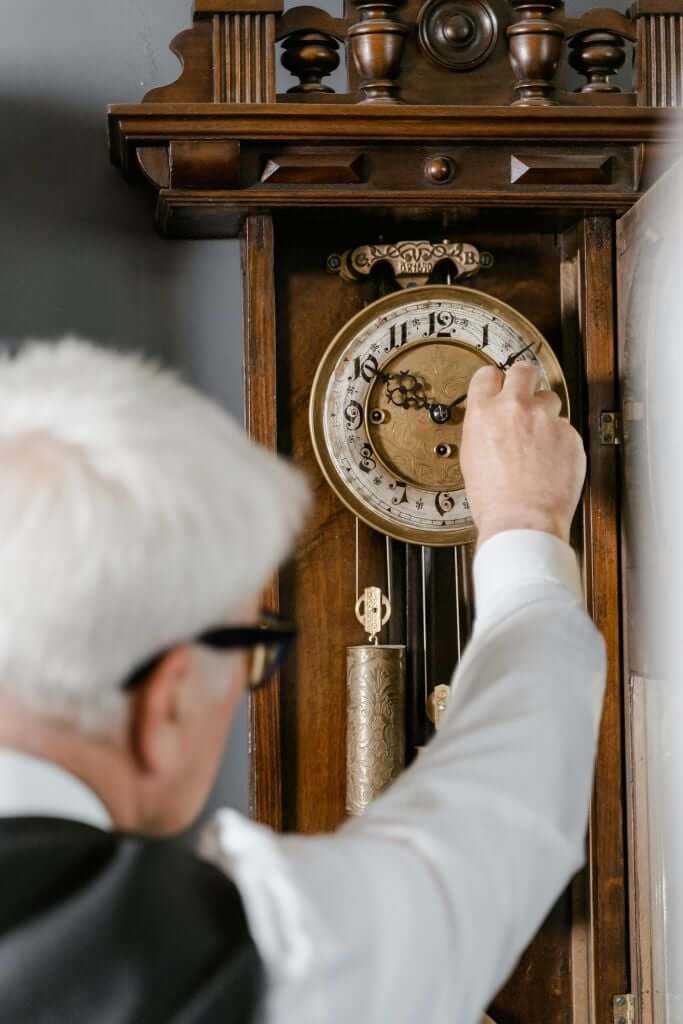

Time has always been slippery. We rush through childhood summers that seemed to last forever, only to find adulthood racing past in a blur. But in later years, time perception takes on yet another rhythm, slower, stretched, sometimes confusingly out of sync with the world around. For older adults, a single afternoon can feel endless, while decades-old memories might sit at the forefront of their minds, sharper than yesterday’s events.
For caregivers, this altered sense of time can be both baffling and demanding. Waiting five minutes may feel like an hour for a parent with dementia. Asking “later” can stir anxiety because “later” feels uncertain. What looks like impatience may, at heart, be an entirely different experience of how time flows.
A growing body of research shows that the way we perceive time is not fixed; it shifts with age, health, and environment. A study published in Frontiers in Aging Neuroscience notes that natural changes in the brain affect how older adults process the passage of time. In addition, an article published in Psychology Today references a study of 918 adults, where 77% agreed that Christmas seems to arrive more quickly every year. These shifts matter because they affect how seniors experience daily routines, waiting periods, and even social connections.
Why Time Feels Different for Older Adults
Time perception is deeply tied to memory, attention, and emotion. When those change, so does the clock inside our heads.
Memory lapses blur the timeline. If someone forgets whether they’ve had lunch, it can feel as though hours have stretched or collapsed into minutes.
Reduced sensory input, such as less hearing or vision, slows stimulation, making the day feel longer and quieter.
Repetition of routines creates sameness. If every day looks much like the one before, time can lose its texture and begin to feel stagnant.
Cognitive decline (dementia, Alzheimer’s, or mild cognitive impairment) reshapes the “now.” The future and past may blur, with the present feeling like a series of isolated moments.
Physical limitations change how long tasks take. Dressing or walking down the hall can stretch the clock in ways younger caregivers often underestimate.
Together, these factors can make seniors feel “out of step” with the world around them—a sensation that can be unsettling if not acknowledged.
How Caregivers Experience the Time Gap
For caregivers, mismatched clocks can lead to friction. You might promise, “We’ll go to the doctor in 20 minutes,” only for your loved one to ask, “Is it time yet?” every two minutes. Or you might find yourself defending the schedule: “Yes, we already had lunch,” or “No, it’s not bedtime yet.” These moments can wear down patience, but they aren’t rooted in stubbornness. They’re rooted in a genuine difference in perception.
Recognizing this is the first step toward easing stress, for both the caregiver and the care recipient.
Practical Strategies for Caregivers
Anchor the Day with Routines
Predictability reduces confusion. Fixed times for waking, meals, medications, and bedtime create a rhythm that becomes familiar even when memory falters. For example, if breakfast always follows a favorite radio program, that program itself becomes a cue that “it’s time to eat.”
Use Visual Aids Generously
Tools like large-print digital clocks, calendars that spell out “Wednesday, September 12,” or color-coded charts help seniors orient themselves. Whiteboards with daily schedules can be updated in real time: “Today: doctor visit at 2 p.m., spaghetti for dinner.” These tangible cues take the guesswork out of abstract time.
Break Down Waiting Periods
Instead of vague reassurances, “We’ll leave in an hour”, tie waiting times to concrete events: “We’ll go after this TV show ends” or “When the timer rings, we’ll head out.” Seniors respond better when time is linked to familiar markers rather than numbers on a clock.
Embrace Storytelling and Conversation
Since many older adults live vividly in their memories, use that to your advantage. If your loved one drifts into tales from decades past, embrace them. Storytelling fills the slower hours and strengthens feelings of connection. It also reframes time not as something to endure, but as something to enrich with meaning.
Add Variety and Gentle Stimulation
Long days without activity drag endlessly. Light exercise like stretching or short walks, music sessions, puzzles, or even baking cookies together can re-energize the day. Something as simple as rearranging photo albums or watching a favorite film can break monotony and restore a sense of flow.
Practice Patience and Validation
When your loved one insists something happened “just yesterday,” correcting them harshly often causes distress. Instead, validate the feeling: “Yes, that was such a good memory.” Then gently reframe with present details. Validation preserves dignity while easing confusion.
Use Environmental Cues
Lighting is a subtle but powerful tool. Open blinds during the day and use dimmers or lamps in the evening to align their environment with the natural rhythm of day and night. For some, specialized “day-night lamps” provide reassurance when they wake at odd hours.
The Emotional Weight of Slowed Time
Slowed time isn’t just a cognitive experience; it’s an emotional one. Seniors often equate long days with loneliness. With fewer social visits, work obligations, or community activities, time can feel empty. A University of Michigan poll found that one in three adults felt lonely some of the time or often during 2024. That loneliness stretches hours into days and weeks into eternities.
Caregivers can soften this by scheduling regular phone calls, video chats, or visits from friends and family. Even small, brief interactions break up long periods of stillness.
Conclusion
Time flies when you’re having fun. Something we have been saying since childhood. However, it also starts flying when you get older. The change presents unique challenges for caregivers, but they’re not insurmountable. We hope the techniques we’ve discussed here can help you deal with this sometimes frustrating phenomenon.
At LL Medico, we can’t stop time or slow it down but we understand how the shifting time perception can challenge caregivers. These challenges are beyond our scope but what we can do is to take away one element of every caregiver’s burden; management of the supplies cabinet.
With our Autoship feature, you can schedule delivery of your care requisites and we’ll have them delivered to your door automatically. So, for all your adult diapers, personal care products, diabetic supplies and more, visit our website today. If you find the choices daunting, give us a call at (855) 422-4556 or email support@llmedico.com. We’ll get you set up in no time at all.
Albert Einstein once joked, “When you sit with a nice girl for two hours, you think it’s only a minute, but when you sit on a hot stove for a minute, you think it’s two hours.” His humor captures the reality: time is subjective, shaped by how we feel and where we focus.