

For many older adults, companionship becomes increasingly important as social circles shift, family members move away, and health challenges emerge. Emotional support animals can play a remarkable role in filling these gaps. Research shows that pet ownership is not just about joy — it carries measurable health and emotional benefits.
According to a Centers for Disease Control and Prevention (CDC) article, pet owners experience lower blood pressure, reduced cholesterol levels, and decreased feelings of loneliness. A 2019 National Poll on Healthy Aging conducted by the University of Michigan found that 88% of pet owners aged 50 to 80 said their pets help them enjoy life. The following infographic illustrates other benefits reported by participants in the poll.
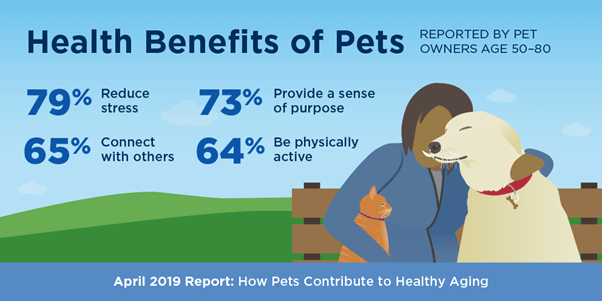
These statistics reinforce a simple truth: pets are more than companions. For seniors, they are sources of love, comfort, and daily purpose. In this article, we explore the profound role of pets in supporting emotional health among older adults, practical considerations for pet ownership, and alternative ways to enjoy animal companionship without the full responsibilities of ownership.
Companionship That Eases Loneliness
Loneliness is a serious health concern among older adults. The U.S. Surgeon General’s Advisory on Loneliness identifies social isolation as a significant risk factor for dementia, depression, and premature death. Pets provide daily interaction and unconditional companionship, helping seniors combat loneliness in meaningful ways.
Unlike human relationships, pets offer consistent affection without judgment. A cat curling up on the couch or a dog greeting its owner with excitement creates an emotional connection that buffers feelings of isolation. Seniors who live alone often describe their pets as family members, bringing comfort in times of sadness and celebration in times of joy.
Emotional Stability and Mental Health
Pets are natural stress relievers. The simple act of stroking a pet releases oxytocin, a hormone associated with bonding and stress reduction. For seniors coping with anxiety or depression, this soothing effect can be especially powerful. Studies also show that pets provide routine and structure, both of which support mental stability.
For example, feeding, walking, or grooming emotional support animals creates daily rituals. These activities can help older adults struggling with grief, life transitions, or the loss of independence find grounding in meaningful tasks. Beyond routine, pets give seniors a sense of responsibility — reinforcing that they are needed and valued.
Physical Health Benefits of Pet Interaction
While the emotional benefits of pets are well known, the physical ones are equally compelling. Dog owners, in particular, tend to be more physically active, thanks to regular walks. Even light activity, such as tossing a ball or gentle grooming, promotes movement and circulation.
These small but consistent forms of activity are valuable for seniors managing chronic conditions like arthritis, hypertension, or diabetes. Pet-related activity also stimulates cognitive engagement — remembering feeding times, scheduling veterinary visits, or teaching simple commands all provide mental exercise that supports brain health.
Different Pets for Different Needs
Not all emotional support animals require the same level of care, making it possible for seniors to choose companions that align with their lifestyle and health.
- Dogs: Loyal and social, but require walking and higher energy investment. Great for active seniors.
- Cats: Independent yet affectionate, often easier for seniors with mobility challenges.
- Birds: Known for their cheerful presence and songs, offering companionship without heavy care needs.
- Fish: Low maintenance and calming, ideal for seniors in assisted living facilities.
- Small mammals (rabbits, guinea pigs): Provide comfort and interaction but require manageable upkeep.
Selecting the right pet ensures that companionship enhances, rather than complicates, a senior’s life.
Barriers and Considerations for Senior Pet Ownership
Despite the benefits, some challenges come with owning emotional support animals. Seniors must consider their health, mobility, and financial resources before bringing an animal into their lives. Veterinary care, grooming, and food costs can add up. In addition, mobility limitations may make walking a dog or lifting heavy litter bags difficult.
To address these barriers, many communities now offer pet support programs for older adults, including volunteer dog walkers, subsidized veterinary care, and foster arrangements that ensure emotional support animals are cared for if the owner is temporarily incapacitated. Families can also play a vital role by sharing caregiving duties for the pet.
Alternatives: Animal Therapy and Shared Companionship
For those who cannot commit to full-time pet ownership, there are still opportunities to experience the benefits of animal companionship.
- Pet therapy programs bring trained animals into nursing homes, hospitals, and senior centers. Just a short visit can reduce stress and brighten mood.
- Fostering programs allow seniors to care for pets temporarily, enjoying companionship without long-term responsibility.
- Family pets can be shared; regular visits with grandchildren’s or children’s animals bring the joy of companionship with limited obligation.
- Community events such as adoption fairs or animal shelter volunteer opportunities give seniors a chance to connect with animals meaningfully.
Social Bridges Built by Pets
Pets often serve as social connectors. Dog walking, for instance, encourages interaction with neighbors and other pet owners. Even casual conversations at the park can foster community ties, which are especially valuable for seniors at risk of isolation.
Furthermore, pet-related activities, such as training classes, community pet shows, or volunteering at shelters, provide structured opportunities to meet others with shared interests. For many seniors, pets not only offer emotional support but also open doors to new friendships.
Practical Tips for Seniors Considering Pets
- Assess your health and mobility. Choose a pet whose needs you can comfortably meet.
- Budget realistically. Include food, medical care, and unexpected expenses.
- Consider lifespan. Smaller or older pets may be a better fit for seniors concerned about long-term care.
- Explore community support. Look into programs offering pet care help for seniors.
- Discuss with family. Ensure loved ones are on board to help in emergencies.
With thoughtful planning, seniors can enjoy the benefits of pets without added stress.
Conclusion
Pets bring warmth, comfort, and a renewed sense of purpose to older adults. Whether through the daily joy of ownership, therapy programs, or shared family pets, animals enrich the lives of seniors in ways both tangible and profound.
At LL Medico, we acknowledge the value of pets for emotional support and overall health benefits. While our capabilities do not lie in the pet and pet care products space, we do strive to support the health and wellness of older adults. We do this by offering top-quality senior care products at competitive prices.
With 30 years of experience in the senior care market, we have gradually built up a comprehensive range of products covering every aspect of senior care. Browse our range of adult diapers, personal care products, nutritional supplements and more. If the choices seem daunting call our team at (855) 422-4556 or email support@llmedico.com. We’d love to discuss how we can support you.
As Anatole France once said, “Until one has loved an animal, a part of one’s soul remains unawakened.” For seniors experiencing the challenges of aging, emotional support animals can be a steady source of unconditional love — helping hearts grow fuller in later life.