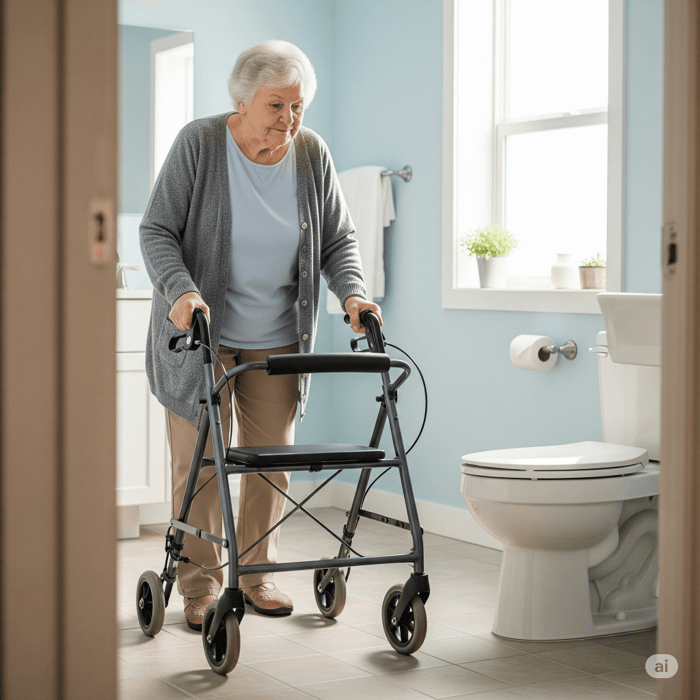

Urinary incontinence (UI) affects a significant portion of older individuals and those with impaired mobility. According to a National Association for Continence (NAFC) article, around 33 million people in the US experience bladder leakage. Although not an inevitable part of aging, incontinence is more prevalent in older people. It is also much more common in women than in men. An NAFC infographic suggests that 50% of women have some form of incontinence.
Impaired mobility affects 12.2% of adults in the US, according to a Centers for Disease Control and Prevention (CDC) infographic. This translates to around 33 million people as well. Impaired mobility limits how well someone moves independently. This increases the risk of falls, makes toileting more challenging and negatively impacts safety and independence.
When impaired mobility co-exists with incontinence, it drastically increases time demands and the caregiver’s burden. Transferring someone to the bathroom or changing their absorbent products now involves additional physical effort. It also requires more frequent check-ins in case of an unexpected leakage.
The Interplay and How They Magnify Each Other
Increased Care Time and Cost
A 1993 survey published in the National Library of Medicine showed that incontinent men who used absorbent pads needed 16.6 care hours per week, compared to 7.4 hours for continent men. Incontinent women’s hours jumped from 5.9 to 10.7 per week. For incontinent men using absorbent products, that translates to an extra $4,000 in annual care costs. In women, the cost increase was $2,000.
Emotional and Psychological Exhaustion
Family caregivers often experience guilt, embarrassment, frustration, and grief while managing accidents. Cleaning up urine leaks and handling soiled absorbent products and clothing can feel awkward and demeaning. In addition, when the care recipient resists due to dementia or shame, the emotional burden can increase on both sides. Caregiver burnout correlates strongly with toileting assistance demands. For recipients, dependency on others for basic bodily functions can erode self-esteem, causing withdrawal or depressive symptoms.
Increased Risk and Complexity
Impaired mobility increases the risk of falling, especially during bathroom routines. Incontinence products may cause skin breakdown if not fitted correctly and changed promptly. Pressure ulcers may develop from extended periods of sitting or lying down. This can lead to injuries or infections and can cause agitation in the care recipient. Incorrect absorbent product selection or misuse often dramatically increases a caregiver’s workload.
The Hidden Costs
Financial Cost of Incontinence
Estimates vary, but direct medical expenses for urinary incontinence in the US are believed to be at least $20 billion annually. There is little recent data relating to indirect costs. However, a 2010 study projected that, including indirect expenses, the total cost of incontinence in the US would increase to $82.6 billion by 2020.
Caregiver Time and Lost Income
The extra hours required for care add up fast. Many caregivers reduce work hours or leave employment entirely, which, when combined with out-of-pocket costs, can be financially disastrous. According to AARP, US family caregivers spend an average of $7,242 yearly or about 26% of their income, on care-related costs.
Impact on Quality of Life
On Caregivers
- Physical exhaustion. Transfers and cleanups involve lifting and bending, leading to back injuries and sleep deprivation.
- Mental strain. Caregivers often forgo their own medical care and social life.
- Chronic stress & burnout. Continual demands can escalate to anxiety, depression, or health breakdown.
On Care Recipients
- Loss of independence. Reliance on others for personal hygiene diminishes self-worth.
- Skin and health issues. Poor toileting care can lead to ulcers, infections, and other physical complications.
- Social withdrawal. Embarrassment may stop them from visiting others or leaving home.
- Emotional decline. Experiences of shame and stigma are common among incontinent individuals.
Tips for Alleviating the Compound Burden
Proper Product Management & Expert Guidance
Choosing the right absorbent product is very important. Improper sizing or fitting of pads or diapers can lead to leaks, which, in turn, can cause skin health problems and add to an already heavy burden for caregivers.
Environment & Accessibility Upgrades
- Install raised toilet seats, grab bars, and bedside commodes.
- Widen doorways and clear pathways for wheelchairs.
- Use non-slip flooring and good lighting to prevent slips and make toileting safer.
Even simple adjustments like adding grab handles can cut transfer effort in half.
Consistent Toileting Schedules
Routine toilet visits reduce accidents and preserve dignity. Caregivers and patients should plan bathroom trips at regular intervals to minimize surprises.
Mobility Support
Assistive devices—walkers, wheelchairs, transfer benches—can prevent falls and reduce physical strain. Intelligent electric wheelchairs are in development to further help both caregivers and recipients.
Skin & Hygiene Care
Prompt cleaning, gentle washing, and protective skin creams prevent rashes, infections, and ulcers. Use barrier creams, gentle soaps, and air-drying routines to maintain skin integrity.
Supportive Technologies
- Incontinence alarms. Moisture detectors can alert caregivers quickly when an accidental leakage happens.
- Smart home video or audio monitoring. Allows for remote supervision of toileting needs.
- Wearable devices. Track movement, positioning, and falls to facilitate timely intervention.
Emotional & Practical Support
- Respite care can help caregivers recharge.
- Support groups reduce isolation for both caregiver and recipient.
- Counseling can be helpful when guilt, anger, or grief arise.
The Vital Role of Dignity
Caregivers are routinely faced with tasks that are deemed taboo by society. The psychological toll can be profound for both caregiver and patient. Treating incontinence as a medical condition rather than an embarrassing weakness or failure helps to preserve dignity and can change caregiving dynamics. Language matters. Use respectful terms, not euphemisms. Normalizing bodily functions and speaking calmly helps maintain self-esteem for care recipients and can reduce awkwardness.
Conclusion
Incontinence and impaired mobility can be a decidedly complicating duo, but it doesn’t have to define someone’s later years. With preparation, practical support, targeted training, and emotional reinforcement, caregivers and their patients can maintain their dignity and health.
At LL Medico, this compounded conundrum resonates. With 30 years of experience in the field of senior care, we have accumulated a depth of knowledge, and we have supported thousands of users and caregivers who have had to deal with these issues.
For expert advice on the selection of adult diapers, personal care products, mobility devices and much more, call LL Medico today. We’re confident we can guide you to the best solution. You can reach us at (855) 422-4556 or email support@llmedico.com. On weekdays between 9 am and 5 pm EST you can also chat with us online.